
How to remove a persistent smell from a sofa
A persistent smell in a sofa is not fixed with a fragrance. Identify the source, air the room, remove debris, avoid risky mixtures — and treat the cause, not just the symptom.
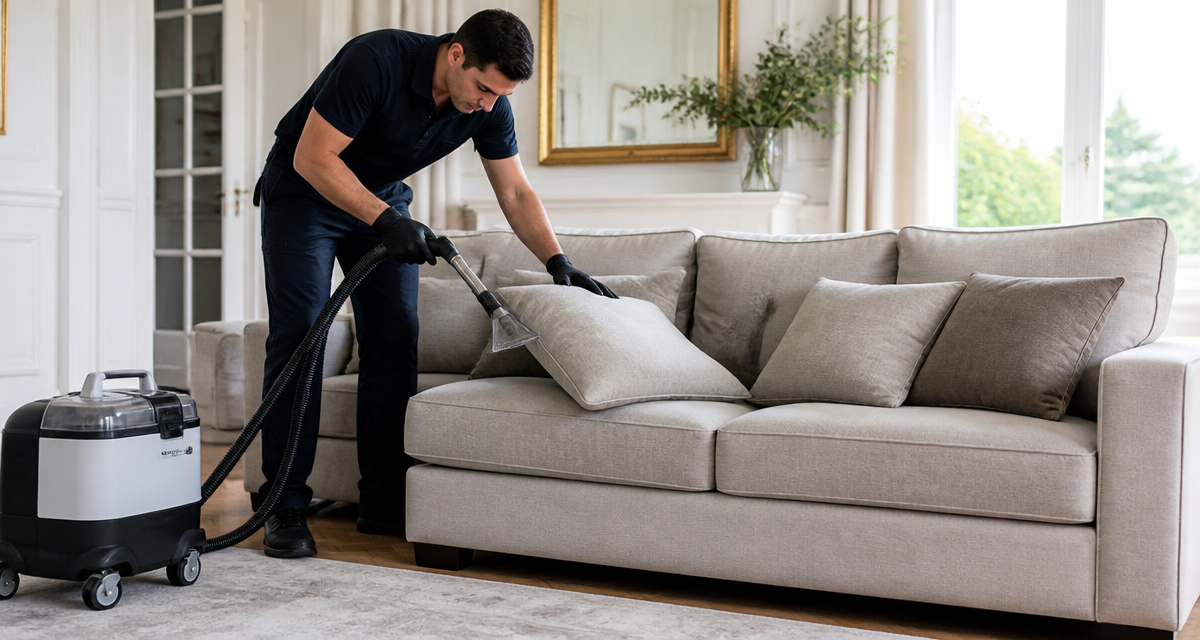
To remove a persistent sofa smell: identify the source (surface, fabric, foam, internal structure), air the room, remove dry debris, avoid perfumed sprays that mask without treating, do not mix aggressive household products, treat the cause rather than the smell itself and, if the odour comes back or resists, ask for a professional assessment. Not every old smell can be fully removed.
Need professional cleaning in Strasbourg?
Send a photo of your sofa, mattress or rug for a first opinion and a clear estimate.
A persistent sofa smell is frustrating: you air the room, you spray a fragrance, you clean the surface — and the smell comes back as soon as the room warms up or someone sits down. The reason is almost always the same: the source is not where you can smell it. It sits deeper — in the fabric, the foam, sometimes the internal structure. As long as that source stays in the sofa, no candle and no perfumed spray will fix the problem in a lasting way.
This article explains, without magic promises, how to approach a stubborn smell: recognising where it comes from, what you can safely do at home without damaging the sofa, which mixtures to avoid, and when a professional treatment becomes useful — especially in Strasbourg, where we handle this type of case regularly.
In short
To act effectively: identify the source, air the room, remove dry debris, avoid sprays that only mask, do not mix aggressive household products, treat the cause rather than the smell, and call a professional if the odour resists a serious cleaning. An old smell soaked into the foam will not be solved by fragrance.
Why does a smell persist in a sofa?
A sofa is not a surface: it is a stack of porous materials. Fabric or leather on top, then padding, then foam, sometimes a wooden panel or a metal frame. Each layer can absorb liquids, moisture and volatile compounds. A smell that lingers is a sign that a soft layer — often the foam — has stored residue. That residue keeps releasing odorous compounds for weeks or months, especially when the room is warm, when someone sits down, or when ventilation is poor.
Odours also combine. A mix of sweat, dust, food residue, moisture and a deodoriser produces one unique smell, hard to identify. That is why searching for the cause matters more than treating at random.
Identify the source before cleaning
Before any product, look. Under removable cushions, under the seat, in the folds, behind the backrest. Touch: a slightly damp, sticky or darker area is often the source. Smell up close, cushion by cushion. A sofa that smells uniformly bad usually has more than one contributor, but one is stronger than the others.
Gather a few facts: how long the smell has been there, any trigger event (pet accident, spilled food, water damage, recent tobacco exposure), any product you applied. Without this diagnosis, you go in circles.
Pet smells, sweat, food, moisture and tobacco
The most common causes we see on-site:
- Pets: trapped hair, saliva, licking, occasional accidents. Urine deserves its own article (see below).
- Sweat: long hours of use without a cover, warm-season / cold-season cycles.
- Food and drinks: crumbs under cushions, sauce drops, coffee, milk, oil, chocolate.
- Moisture: sofa placed against a cold wall, poorly ventilated room, old water damage, underside never dried.
- Tobacco: fine particles clinging to fabric and foam, very slow to leave.
Each cause calls for a different approach. Cold tobacco is not treated like sweat, and a moisture smell is not fixed by adding more water.
Why do deodorising sprays not fix the problem?
A perfumed spray adds fragrance. It does not remove the substance that smells. For a few hours, the original smell is covered; then it comes back, often mixed with the fragrance, which can be worse than the starting point. Some "anti-odour" sprays neutralise a little on the surface, but they do not reach the foam. If the source is deep, the result stays superficial and temporary.
What can you safely do at home?
A few careful actions can help before any professional intervention:
- Ventilate the room widely, several times a day, over several days.
- Remove loose cushions and vacuum every hidden area carefully.
- Remove dry debris (crumbs, hair, dust) with a strong vacuum cleaner.
- Blot damp spots with an absorbent cloth, without rubbing.
- Let it dry naturally — no hot hair-dryer, no direct radiator.
These actions do not "cure" a deep smell, but they avoid making it worse. They also let you see whether the odour fades on its own (good sign) or comes back unchanged (deeper source, usually the foam).
Which products and mixtures should you avoid?
Some household mixtures are dangerous or useless:
- Never mix bleach and ammonia: toxic gases are released.
- Do not mix bleach and vinegar.
- Do not stack vinegar + baking soda + hydrogen peroxide + fragrance: it does not "boost" anything and can discolour the fabric.
- Avoid misused industrial products (heavy degreasers, solvents): risk of fibre burn.
- Avoid uncontrolled steam: excess moisture can make some smells worse, especially urine-related.
A badly-treated sofa is often harder to clean afterwards. We regularly see sofas whose original smell has been "locked in" by a bad home mixture.
How does a professional odour treatment work?
A professional treatment starts with a diagnosis: fabric type, filling material, likely source, history. Then a deep vacuum, a pre-treatment tailored to the identified cause (sweat, moisture, food residue, tobacco, pets), and a low-moisture injection-extraction cleaning. This method delivers just enough cleaning solution and immediately extracts residues and moisture.
When relevant, a specific neutralising treatment is applied: odour molecules are neutralised, not just covered. A controlled drying then prevents new moisture-related odours.
Can a smell come back after cleaning?
Yes, in some cases. A smell can return if the source has not been reached — for example an old infiltration deep in the foam. It can also come back slightly during drying, then fade. That is why we prefer to state the likely outcome honestly before the intervention rather than promise a total disappearance.
A second targeted pass may be needed on the toughest cases. It depends on the sofa, on the age of the odour and on the nature of the substance.
Can total removal be guaranteed?
No, and no serious professional guarantees it. We clearly improve the situation in the vast majority of cases, often to the point where the odour is no longer noticed day-to-day. But if the foam has been saturated for months, or if a biological liquid has reached the internal structure, cleaning has a limit — even professional cleaning. We prefer to say so before starting.
When should a cushion or foam be replaced?
When the foam has absorbed a large amount of liquid (old urine, water damage, sugary drink in quantity), surface cleaning will not be enough. Cleaning treats the fabric and part of the padding, but does not "repair" a contaminated foam core. In that case, replacing the cushion or filling is often more effective — and more honest — than repeated treatments.
Sofa odour treatment in Strasbourg and Alsace
Pronett67 works on-site in Strasbourg, the Eurométropole and Alsace for sofa cleaning and odour treatment. You can send photos on WhatsApp and describe the likely source and age of the smell: this lets us give an indicative range and prepare the right products. The final diagnosis happens on site.
Old stain or persistent odour?
Send us a photo. We reply quickly with an honest first opinion and a clear estimate.
Conclusion
A persistent sofa smell is not random: it is a signal. It almost always means something was absorbed deep in the material. Treating it needs a method — diagnosis, careful actions, no risky mixtures — and sometimes a professional intervention. What we do not do: promise a "like new" sofa or a sterilisation. What we do well: significantly and lastingly improve the situation, without damaging your sofa.
What Pronett67 can do
Pronett67 — Strasbourg / Alsace. Sofa cleaning.
Frequently asked questions
Why does a bad smell remain in a sofa?
Can airing the room remove the smell?
Does bicarbonate permanently remove sofa odours?
Why do deodorising sprays not solve the problem?
Can pet smells be completely removed?
Can professional cleaning remove tobacco smell?
Can the smell return after cleaning?
When should a sofa cushion or foam be replaced?
Related services
Related articles

A second-hand sofa: what to check and how to clean it before use
Before collecting a second-hand sofa: what to ask the seller, which areas to inspect and which care instructions you need to plan suitable cleaning.
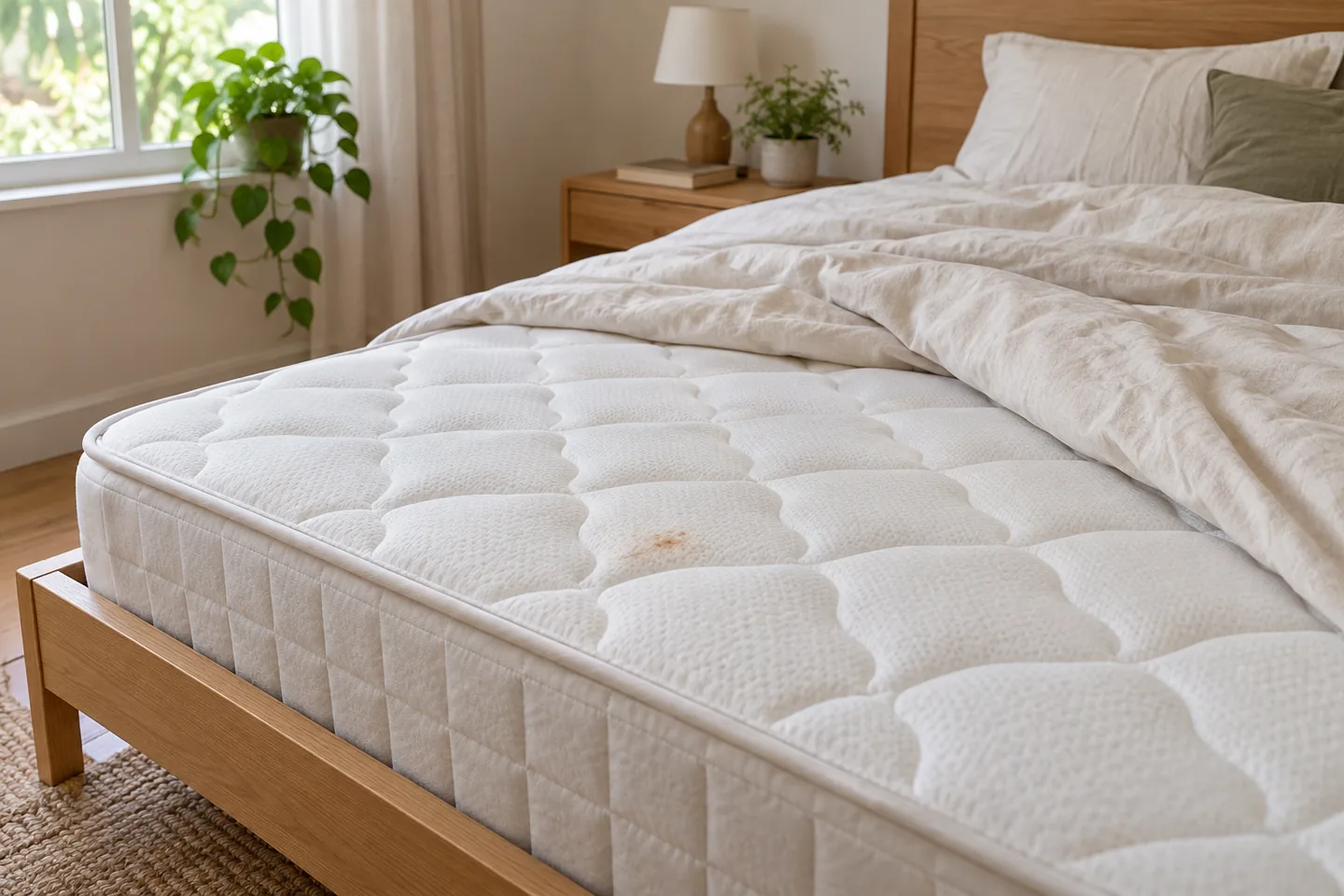
Blood stains on a mattress: what to do for fresh or dried marks
A small stain has just appeared, or an old mark will not shift: how to choose your first steps according to the fabric, the mattress instructions and any treatments already tried.

How to clean a corduroy sofa without damaging the fabric
Crumbs between the ribs, a pale mark on the seat or a spilt drink: how to care for corduroy’s raised texture without improvising a wet treatment.
Need professional cleaning in Strasbourg?
Send a photo of your sofa, mattress or rug for a first opinion and a clear estimate.