
How to clean a fabric chair with a non-removable cover
A marked seat, crumbs in the seams or a grubby backrest: care for upholstered dining chairs without soaking the padding, with precautions for fixed covers.

To clean a fabric chair with a non-removable cover, start by gently vacuuming the seat, backrest and seams. Blot spills without rubbing. Consider damp cleaning only where the manufacturer's instructions allow it: use a compatible product, test an inconspicuous area and keep moisture to a minimum. Allow the chair to dry completely before use. If reliable care instructions are unavailable, stick to gentle vacuuming and ask for advice.
Need professional cleaning in Strasbourg?
Send a photo of your sofa, mattress or rug for a first opinion and a clear estimate.
Coffee on the seat, crumbs caught in a seam or hand marks on the backrest: a dining chair has small cleaning areas, but the padding and frame sit just underneath them. With a fixed cover, cleaning happens in place. The aim is to remove what you can without turning a small stain into a soaked seat.
This guide takes you from removing dry dust to deciding whether a set of chairs needs professional attention. Start by checking what the manufacturer permits. The appearance of the fabric alone cannot tell you which cleaning method is suitable.
1. Check the cover, care label and chair construction
Look underneath the seat for a label, or find the care sheet for the exact model. A zip may be there for assembly rather than to make the cover removable or washable. Do not pull out staples or remove the protective underside fabric to reach the foam.
Identify the upholstered parts: the seat alone, the backrest, the sides or the whole shell. Note the piping, buttons and points where fabric meets wood or metal. One chair can combine several materials with different care requirements.
2. Vacuum the seat, backrest and seams
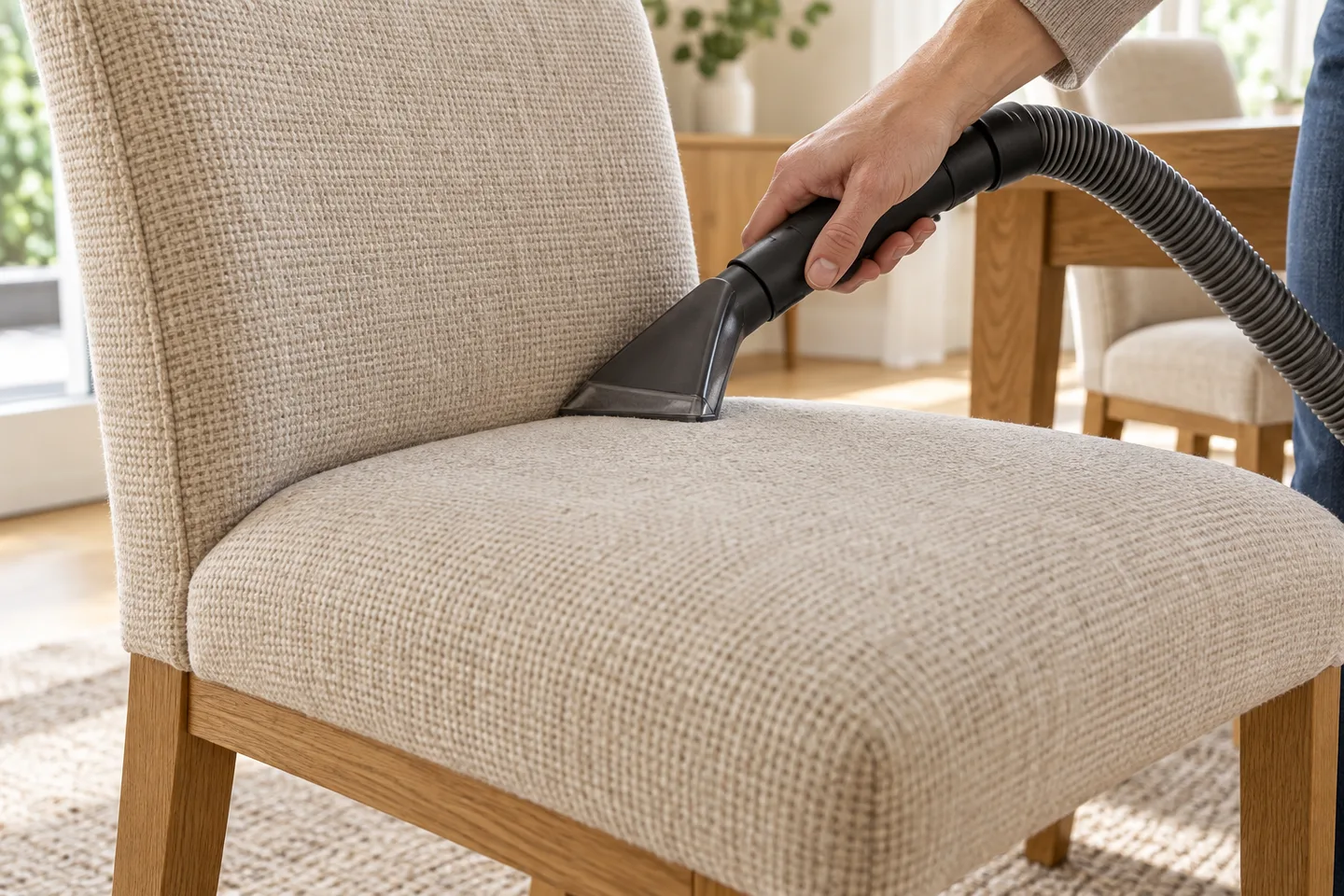
Have an upholstery vacuum attachment, clean white cloths and a space where the chair can remain unused if an approved damp treatment is needed. Start dry: adding moisture to crumbs or dust makes the cleaning job harder.
- Vacuum the seat with moderate suction and steady passes, without pressing the attachment hard against the fabric.
- Go over both accessible sides of the backrest and the upholstered edges.
- Follow the seat-to-backrest junction, then the seams that collect crumbs. Do not force a crevice tool into the fabric.
- Check the result in good light. A mark that remains after vacuuming may be wear or a change in the direction of the pile rather than dirt.
Avoid rotary brushes and vigorous brushing unless the manufacturer approves them. On looped or pile fabrics, snagging the fibres can leave a more noticeable mark than the dust you were trying to remove.
3. After a spill: absorb first, then decide
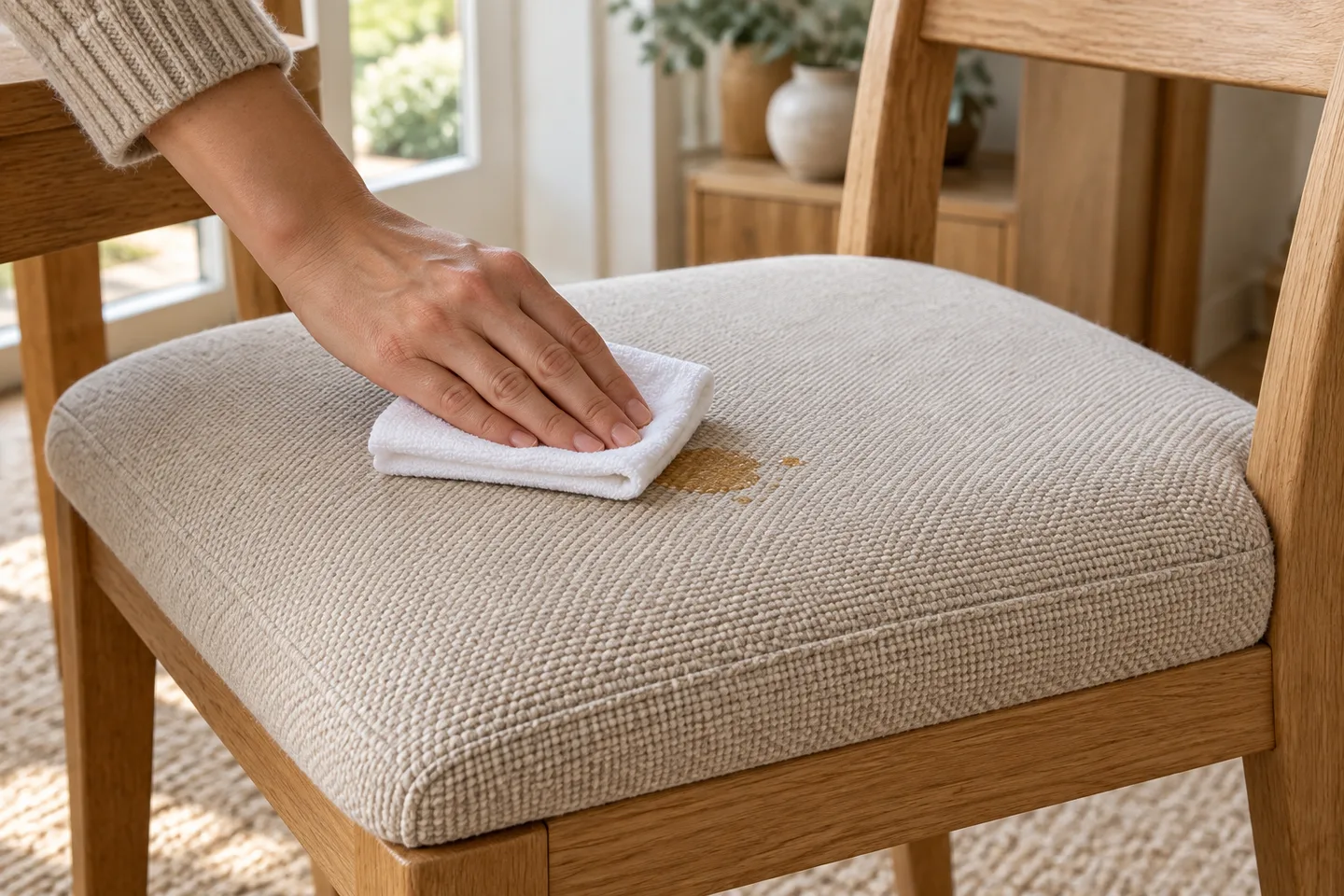
Has a drink just spilled? Place an absorbent white cloth over the liquid and press gently, without rubbing. Move to a dry part of the cloth as it becomes damp. For thick food residue, first lift away the excess with a spoon without pushing it into the weave.
| What you can see | The first step |
|---|---|
| Crumbs or dry dust | Vacuum before considering another treatment. |
| A drink that is still liquid | Absorb with a clean white cloth without spreading it. |
| Thick food residue | Gently lift off the excess, then check the care instructions. |
| An old ring or a mark of unknown origin | Photograph the area and record any products already used before asking for advice. |
Do not automatically reach for a multipurpose stain remover after a coffee spill. Keep a note of what caused the stain and what you have already done. That information helps if the chair later needs professional treatment.
4. Use only a compatible cleaning method
If the care instructions allow damp cleaning, select a product intended for that fabric and follow its dilution directions. An inconspicuous test checks a method that is already permitted; it does not override a prohibition. Let the test area dry before comparing the colour, texture and edges.
Work gradually with very little liquid. Where the product directions permit it, dampen the cloth rather than spraying directly onto the seat. Use light blotting movements and a clean section of cloth. Remove residues only as directed by the product and furniture manufacturer: some upholstery does not tolerate repeated cleaning passes.
Stop if colour transfers onto the cloth, the texture changes or the mark spreads. Do not try to even out a ring by wetting the whole chair. A lighter patch may be wear, and a stain remover cannot replace dye that has been lost.
5. Protect the padding and frame
The visible fabric is only the surface. Prevent liquid collecting at seams, around buttons or where the upholstery meets the frame. Immediately wipe any drips from legs or wooden parts using a cloth suitable for the finish. Keep upholstery products on the areas they are intended to treat.
Foam that remains damp keeps the chair out of use for longer. Do not keep applying cleaner because the seat still looks marked while wet. Pause, allow it to dry and reassess before another attempt.
6. Avoid one-size-fits-all recipes and machines
A vinegar-and-bicarbonate mixture, laundry detergent or washing-up liquid is not a universal solution for fabric chairs. Do not layer different products onto a stubborn stain. A product described as natural still needs to be checked for compatibility with the upholstery.
Steam cleaning and spray extraction are different processes. Neither automatically suits a fixed cover. Before hiring a machine for six chairs, check the care instructions, the suitability of the attachment and your drying arrangements. A ban on steam still applies even if the appliance promises quick cleaning.
7. Wait until the chairs are fully dry before sitting
Place the chairs in a ventilated room with space between them. Avoid pushing them tightly under the table or covering the seats straight away. Arrange other seating: putting weight on a damp seat makes it harder to return the chair to normal use.
There is no single drying time for every fabric. Padding, room humidity and the amount of liquid used all matter. Do not rely only on the impression of a dry surface. If dampness, odour or a ring persists, stop further treatment and ask for advice. Avoid radiators and concentrated heat as a shortcut.

8. Several chairs in Strasbourg: prepare a useful quote request
Four marked seats, stained backrests or earlier cleaning attempts that did not work: professional advice can help assess the set before you start again. Send an overall photograph, close-ups of the marks, the care label and the number of chairs. Explain whether only the seat or the backrest is affected and name any products already applied.
Pronett67 cleans upholstered chairs in Strasbourg and the Eurométropole. The service page lists €15 per chair and a reduced rate for several items or combined services. Ask for confirmation of the amount for your request. The fabric and condition of the seats determine the possible treatment and expected result.
- Upholstered armchair and chair cleaning in Strasbourg
- Which photographs should you send for a cleaning quote?
Manufacturer guidance and sources
IKEA, Kvadrat and Herman Miller emphasise care instructions specific to each upholstery material. The Herman Miller guide distinguishes fabrics that permit certain treatments from others that prohibit liquids or steam. These documents concern their own materials; they do not replace the care sheet for your chair.
What Pronett67 can do
Pronett67 — Strasbourg / Alsace. Armchair and chair cleaning.
Frequently asked questions
Can you steam clean a fabric chair?
Are bicarbonate of soda or vinegar suitable for every chair?
What if the chair has no care label?
How do you remove a water ring from a fabric seat?
How long should chairs be left to dry?
How much does cleaning several chairs in Strasbourg cost?
Related services
Related articles
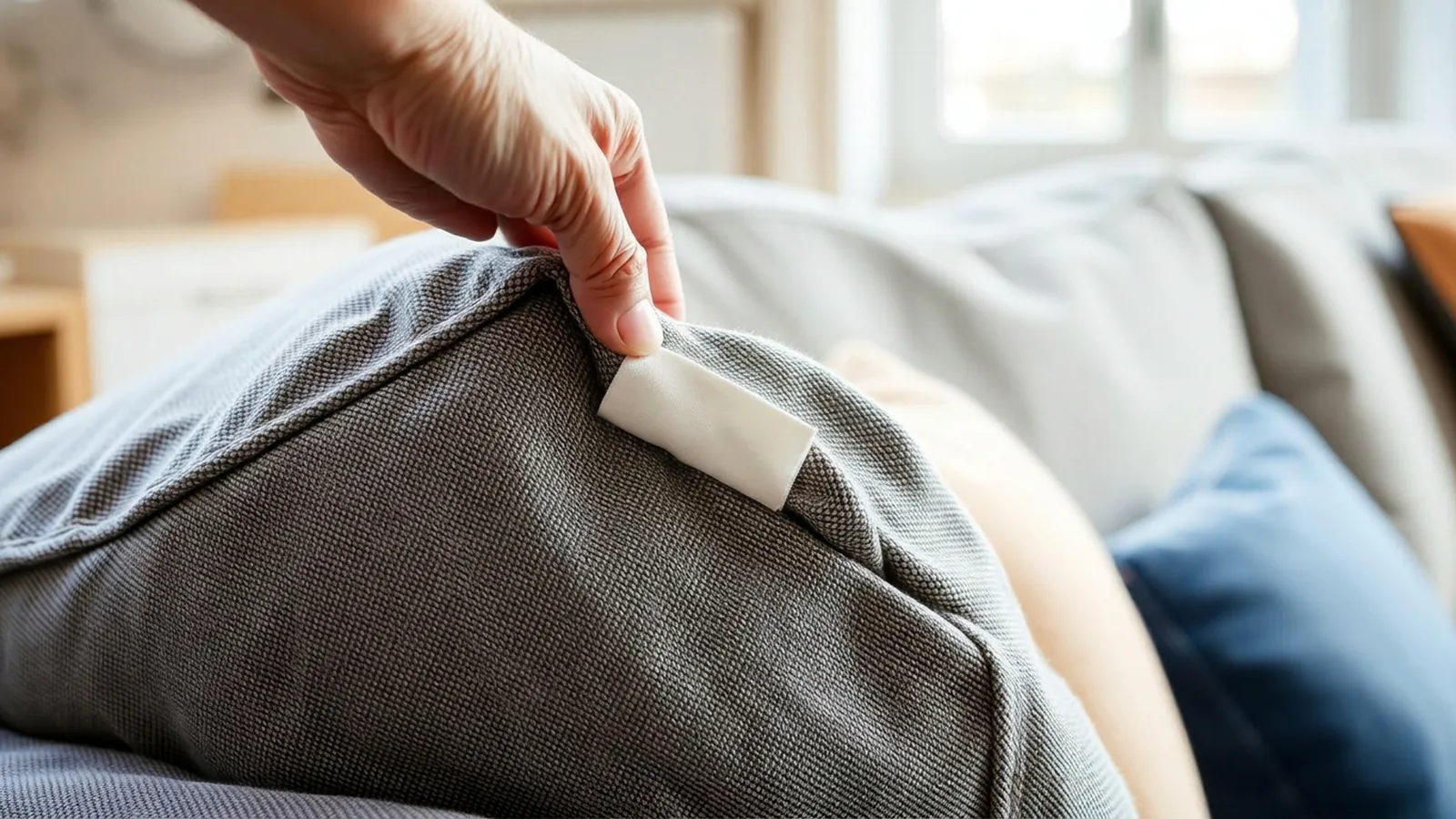
Codes W, S, WS and X: how to read a sofa care label
Codes W, S, WS and X appear on many sofa labels, but they don't replace the manufacturer's instructions or a hidden-area test. Here is how to read them safely.

How Pronett67 prepares a cleaning quote from your photos
Full-piece photo, stain close-ups, care label, dimensions: here is what really helps us prepare a useful first estimate — and why some checks only happen on site.
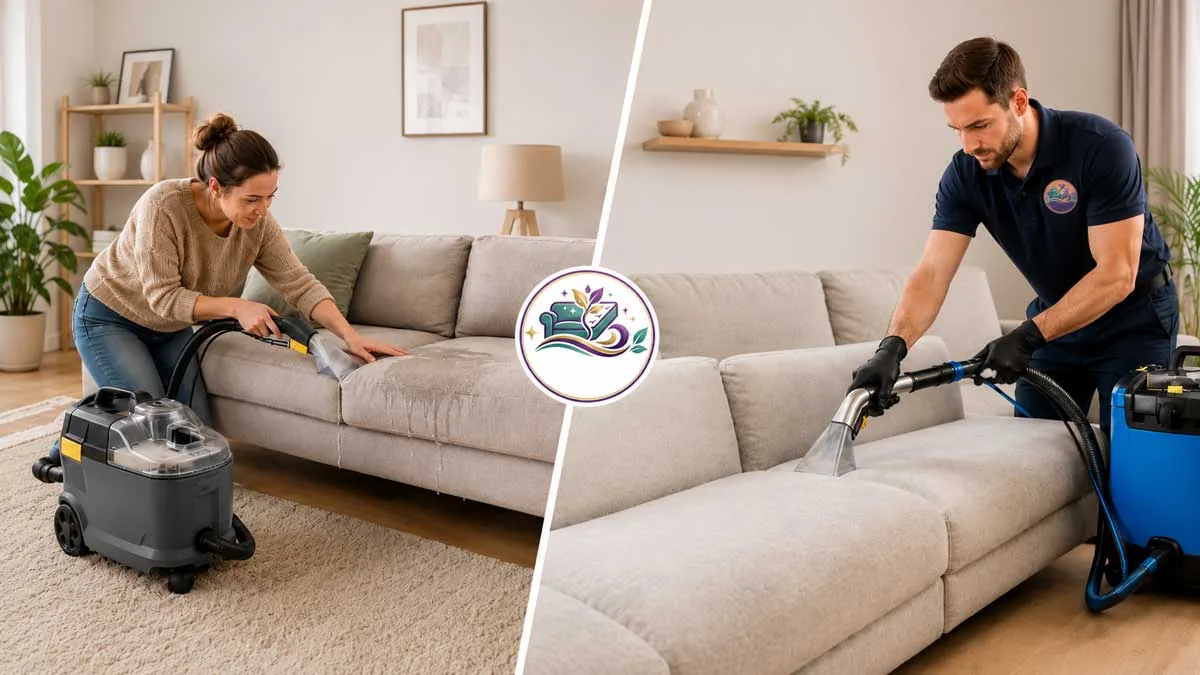
Renting a carpet cleaner in Strasbourg or professional cleaning: which to choose?
Renting a carpet cleaner looks cheaper at first sight, but results, time spent and risks differ. Here is an honest comparison to help you choose.
Need professional cleaning in Strasbourg?
Send a photo of your sofa, mattress or rug for a first opinion and a clear estimate.