
Blood stains on a mattress: what to do for fresh or dried marks
A small stain has just appeared, or an old mark will not shift: how to choose your first steps according to the fabric, the mattress instructions and any treatments already tried.
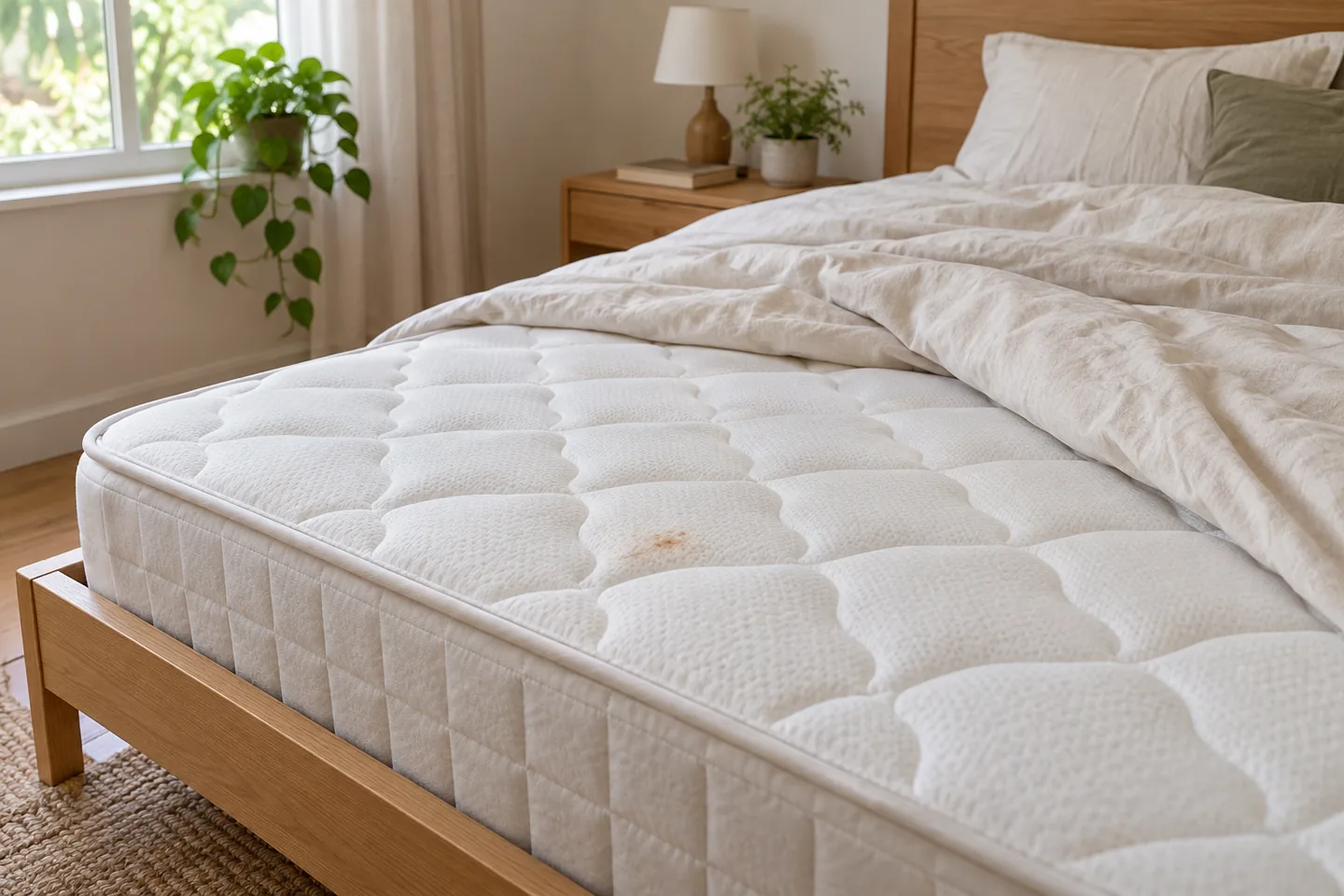
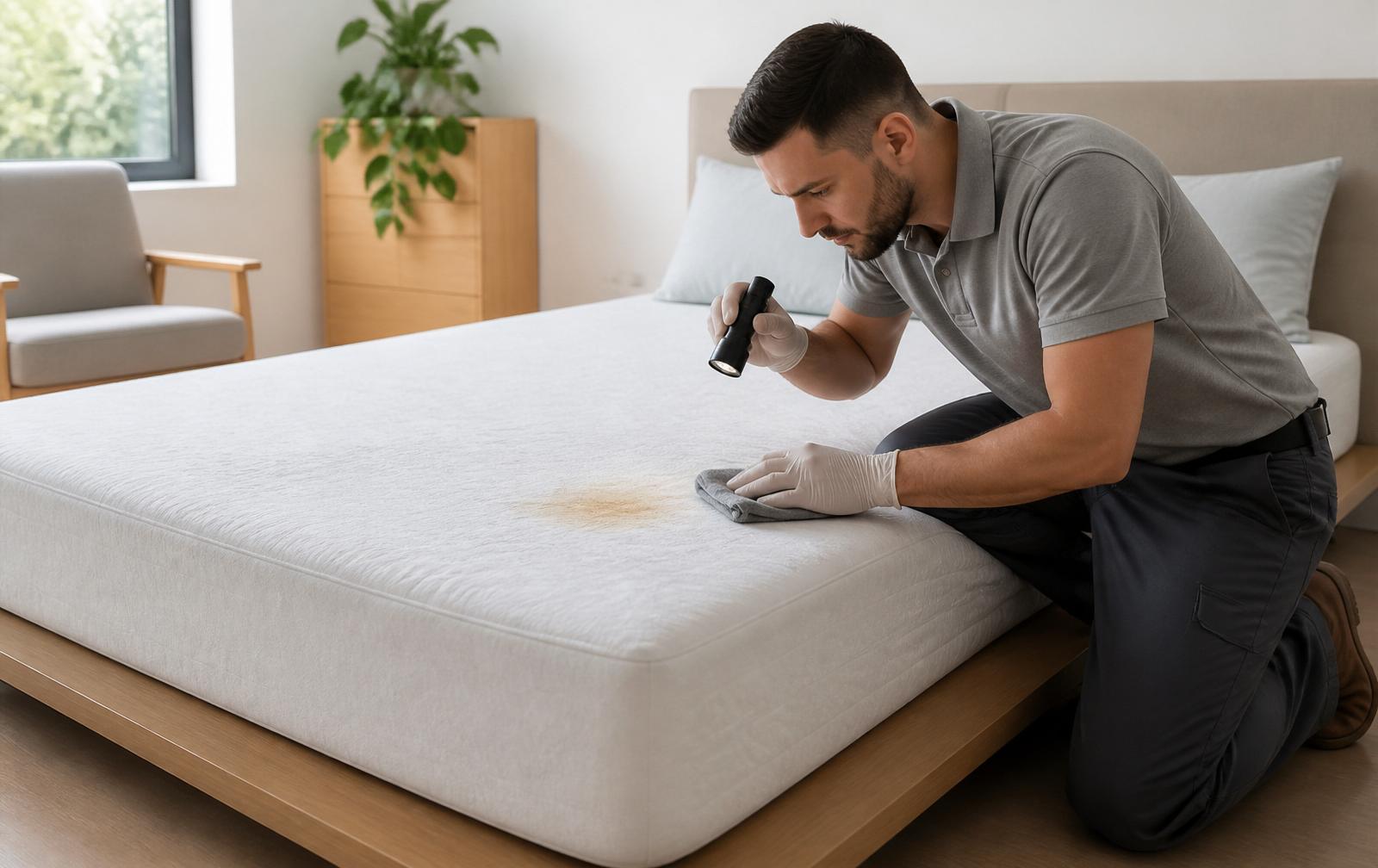
For a blood stain on a mattress, remove the bedding and blot any liquid left on the surface with a dry white cloth, without rubbing. Then check the care instructions for the exact model. If they allow spot cleaning with water, use a cloth barely dampened with cold water; do not rinse the mattress. A dried mark is no reason to add more water or mix products. Hydrogen peroxide, enzymes and steam each need specific confirmation of compatibility. Wait until the mattress is completely dry before making the bed; removing the colour does not prove disinfection.
Need professional cleaning in Strasbourg?
Send a photo of your sofa, mattress or rug for a first opinion and a clear estimate.
You remove the sheet and discover a small blood stain on the mattress. It may still be wet; perhaps you have already tried cleaning it and only a brown outline remains. These two situations need different approaches. Before reaching for a stain remover, consider three questions: what remains on the surface, what does the manufacturer allow, and which products have already touched the fabric?
1. Distinguish between a fresh, dried or previously treated stain
A mark that is still wet can first be blotted without adding a product. A dried mark needs a different assessment: old blood stains can be harder to remove, even from washable fabric. On a mattress, access to the filling and the options for rinsing are also limited. A method intended for a sheet should therefore not be applied to the whole mattress.
| Situation | First step | What to check before continuing |
|---|---|---|
| A small stain that is still wet | Blot with a dry white cloth without spreading it. | The mattress care instructions and how far the liquid appears to have penetrated. |
| A dried mark with a known cause | Note its age and take a photograph before trying anything. | The permitted method and any treatments already used. |
| A ring mark after an initial cleaning attempt | Let it dry and note the products applied. | Possible residue, a change in the fabric or lingering moisture. |
| A mark of unknown origin or extensive soiling | Avoid handling or using the affected area. | Whether specialist attention is needed before ordinary cleaning. |
Colour alone cannot tell you how old a stain is or confirm its cause. A brownish mark may also have been altered by a product. Photograph the surface in neutral lighting and keep details of anything you have applied. This information will be more useful to a professional than another attempt made at random.
2. Read the care instructions for the cover and mattress core
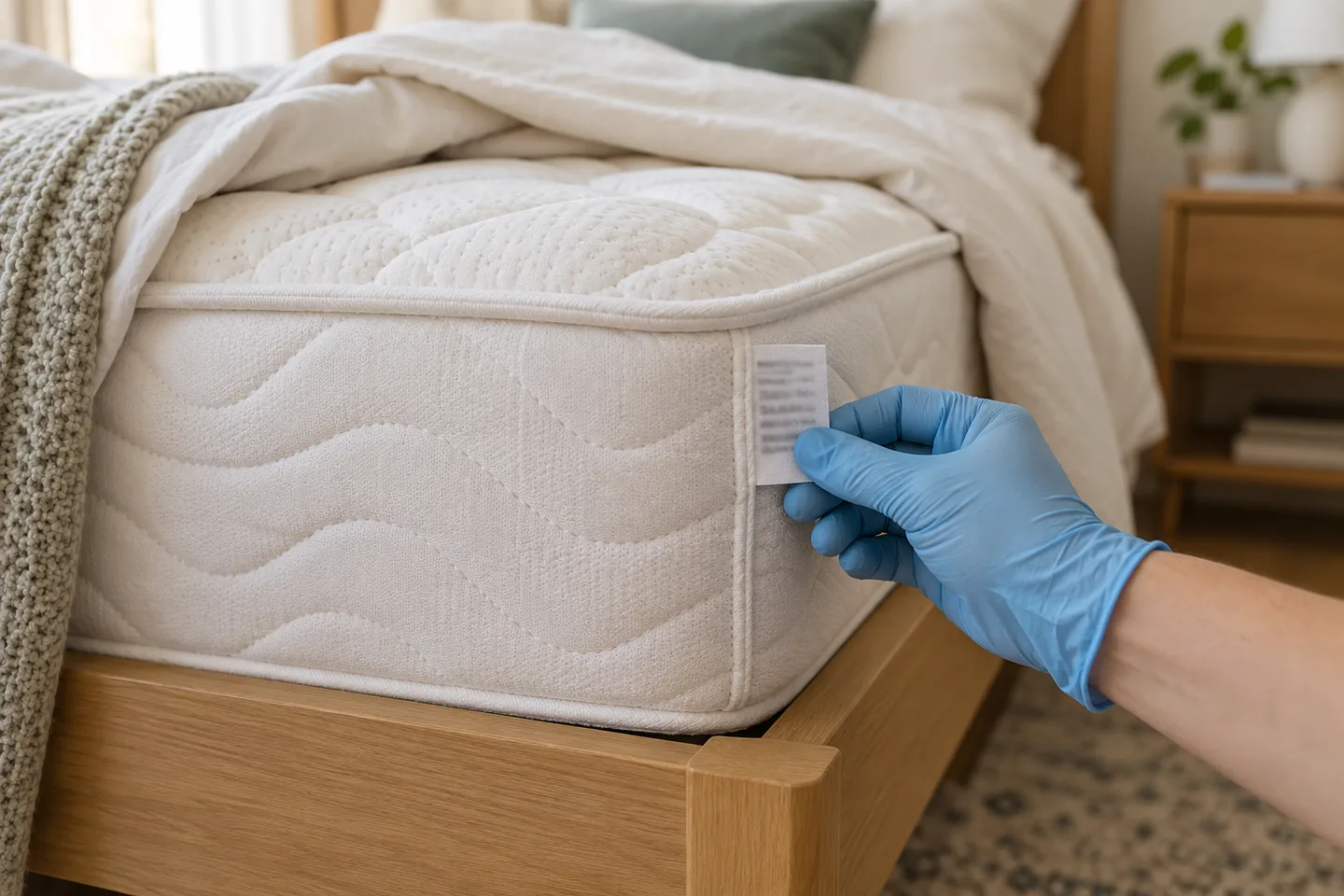
Find the label and care instructions for the exact model, then identify the affected part: sheet, mattress protector, removable cover, fixed outer fabric or inner material. The rules for a washable item do not apply to the other parts. A zip alone does not mean you can remove the cover; some coverings form part of the mattress construction.
The care instructions for TEMPUR PRO SmartCool models illustrate why this distinction matters: the material and the different covers have separate care requirements. Some model instructions allow very limited wiping with a thoroughly wrung-out cloth; this does not authorise soaking the foam or applying a stain remover to it. The term ‘memory foam’ is therefore not enough to choose a method, and permission found for another model does not replace your own care instructions.
3. Fresh blood: blot, then dab only if the fabric allows it
For a small household stain with a known cause, avoid direct contact with the blood: put on suitable disposable gloves and prepare clean white cloths. Remove the sheet and mattress protector without dragging their stained side across the mattress. Treat these items separately according to their own labels. Do not start by spraying the mattress.
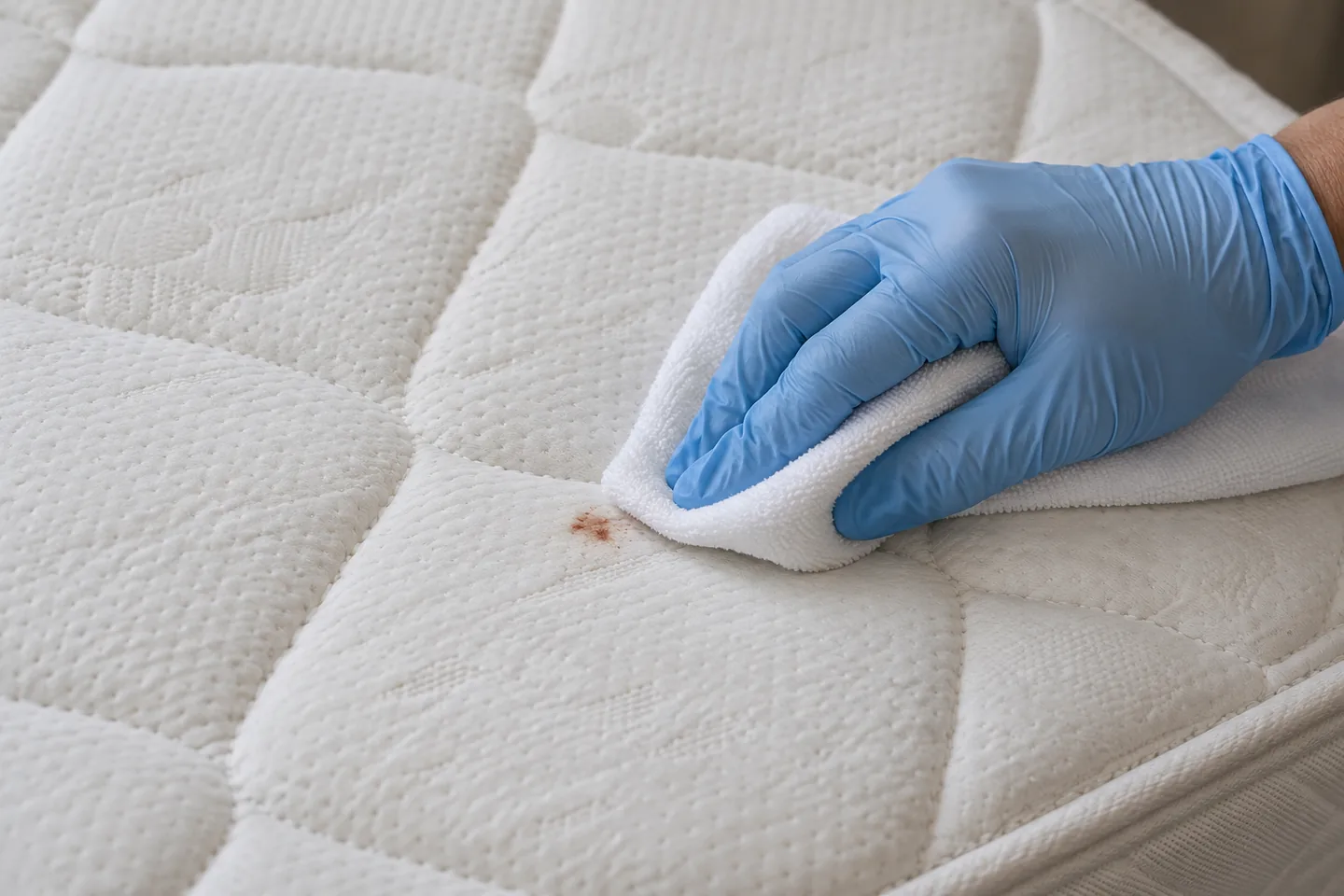
- Place a dry, absorbent white cloth over any liquid still present and apply light pressure without rubbing.
- Switch to a clean part of the cloth as soon as it becomes soiled. Work gently at the edge of the mark to avoid spreading it.
- If the care instructions allow spot cleaning with water, use another white cloth barely dampened with cold water and well wrung out. Dab lightly in small touches without pouring water onto the mattress.
- Blot up the moisture with a dry cloth. Stop if the fabric changes appearance, dye from the fabric transfers to the cloth or the ring mark spreads.
- Let it dry completely before deciding whether further treatment is needed. Remove your gloves and wash your hands after handling it.
Cold water is the usual starting point for blood on washable fabrics, because heat can set this type of stain. This guidance does not give you permission to wet any mattress. Where water is prohibited, do not try to get around the instructions by using a smaller sponge or spraying from a distance. Ask which method is intended for the outer fabric.
4. Dried blood: avoid repeated attempts
An old stain is not simply a fresh stain that needs more water. Stain removal may leave some discolouration, and the fabric may already show the effects of a previous treatment. Do not scrape it with a hard object or wet a large area to try to erase the edge of the mark. You could mainly end up enlarging the area that needs to dry.
If a particular product is permitted for this outer fabric, follow its application method and dosage, and consider whether its residue can actually be removed. Carry out the inconspicuous test required by the care instructions and wait until it is dry before comparing the feel and colour. A stain that looks less visible on wet fabric is not a final result. If a test brings no improvement or changes the fabric, have the situation assessed rather than trying one product after another.
5. Hydrogen peroxide, enzymes and steam: check compatibility
Hydrogen peroxide often appears in searches about blood stains, but its bleaching action does not distinguish between the stain and sensitive parts of the outer fabric. Without manufacturer guidance for this mattress and this product, do not apply it directly. A concentration given in an online recipe proves neither that the dyes will withstand it nor that residue can be removed from the filling.
Enzyme products may form part of cleaning methods for certain washable fabrics. They are not automatically suitable for every fibre, adhesive or internal mattress layer. Likewise, steam or spray extraction requires confirmed compatibility with the construction and properly managed drying. No appliance establishes that permission on its own. Do not use heat as a first step for blood, and do not mix household cleaning products.
6. Let the mattress dry before making the bed
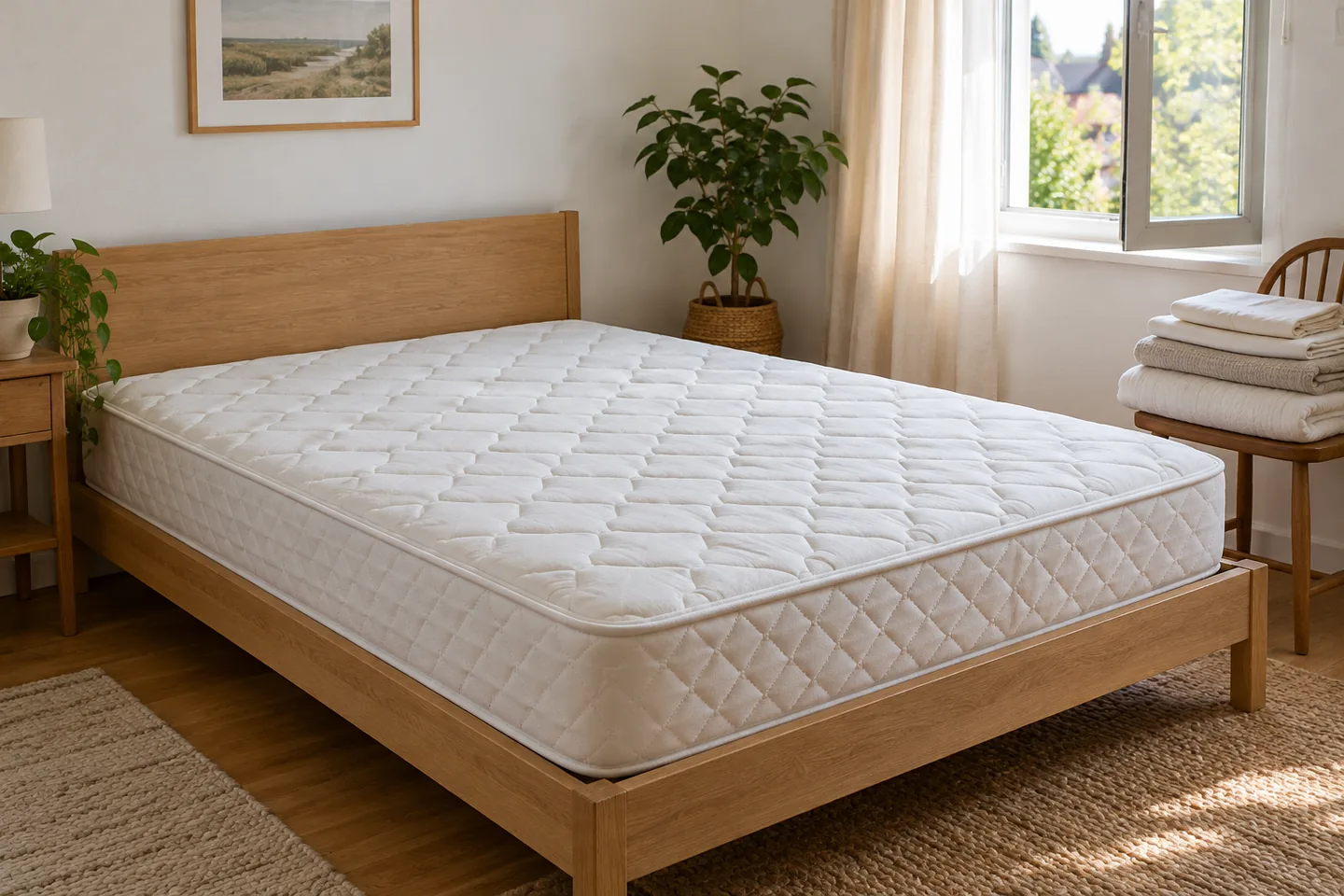
After a permitted wet treatment, leave the mattress uncovered and encourage air circulation in the room. Follow the model’s instructions for its position and support; do not bend a mattress whose construction does not allow it. Keep the sheet, mattress protector and pillows off until it is completely dry. A waterproof protector must not be used to seal in an area that is still damp.
There is no number of hours that applies to every stain and every mattress. The amount of liquid, the depth it has reached, ventilation and room humidity all affect the situation. A surface that feels dry does not always tell you about the layers beneath. Do not try to make the mattress ready to sleep on sooner with an iron, a hot hairdryer or direct heat. If you can still detect moisture or have doubts about the mattress core, arrange somewhere else to sleep and seek advice.
7. Stain removal and disinfection serve different purposes
A faded stain does not prove that the surface has been disinfected, and a stain that remains cannot, on its own, tell you whether the mattress is hygienic. Disinfection requires the right product, application, contact time and a compatible surface. Advice for hard surfaces must not become a recipe to pour onto absorbent foam.
This guide concerns a small household stain with a known cause. For extensive soiling, blood of unknown origin or a situation requiring a specific procedure, stop using the affected area and seek appropriate specialist help. Ordinary textile cleaning must not be presented as validated decontamination. You do not need to try a disinfectant at random before asking for advice.
8. In Strasbourg, prepare the details for professional advice
Pronett67 offers mattress cleaning in Strasbourg and the surrounding area. When assessing a blood stain, whether treatment is worthwhile depends on the outer fabric, the extent of the stain, its suspected depth and previous cleaning attempts. A photograph can help prepare the discussion, but cannot guarantee remotely that dried blood will disappear or replace checks on site.
- Give the mattress dimensions and say which side or sides are affected.
- Send an overall view, a close-up of the stain and a photo of the label, without unnecessary personal information.
- Say whether the mark has just appeared, is old or is of unknown age.
- Give the names of products and appliances already used, and mention any remaining moisture.
- Mattress cleaning at home in Strasbourg
- The checks and stages of professional mattress cleaning
- Understand other yellow stains on a mattress
- Read the relevant guide if the stain is caused by urine
Photo assessment
Get a quote for your mattress
Send photos of your mattress, the stain and the care label. We’ll prepare an initial estimate based on the material and condition.
Sources and care instructions to consult
The sources below distinguish between stain removal on washable fabrics, mattress care and hygiene precautions. A recommendation for laundry does not authorise treating the mattress filling. When choosing a method, the care instructions for the exact model remain the starting point.
- American Cleaning Institute: blood stain removal on washable fabrics
- Persil: precautions for stains on a mattress
- TEMPUR: care for PRO SmartCool mattresses and their covers
- Sealy: mattress care, blotting and drying
- Purple: care restrictions and covers according to the model
- CDC: the difference between cleaning and disinfection at home
What Pronett67 can do
Pronett67 — Strasbourg / Alsace. Mattress cleaning.
Frequently asked questions
Should you use cold water on a blood stain?
Can a dried blood stain disappear completely?
Can you put hydrogen peroxide directly on a mattress?
Does a zip mean you can wash the cover?
Does steam remove the stain and disinfect the mattress?
When can you put the sheet back on and sleep on the mattress?
Related services
Related articles

How does professional mattress cleaning work?
Inspection, vacuuming, pre-treatment, adapted cleaning, drying: what a professional mattress cleaner actually does, without unrealistic promises.
Yellow stains on a mattress: causes and what to do
Not every yellow stain has the same cause: sweat, humidity, oxidation, old spills. What can realistically be cleaned, what to avoid and when a professional is the right call.

A second-hand sofa: what to check and how to clean it before use
Before collecting a second-hand sofa: what to ask the seller, which areas to inspect and which care instructions you need to plan suitable cleaning.
Need professional cleaning in Strasbourg?
Send a photo of your sofa, mattress or rug for a first opinion and a clear estimate.