
Yellow stains on a mattress: causes and what to do
Not every yellow stain has the same cause: sweat, humidity, oxidation, old spills. What can realistically be cleaned, what to avoid and when a professional is the right call.
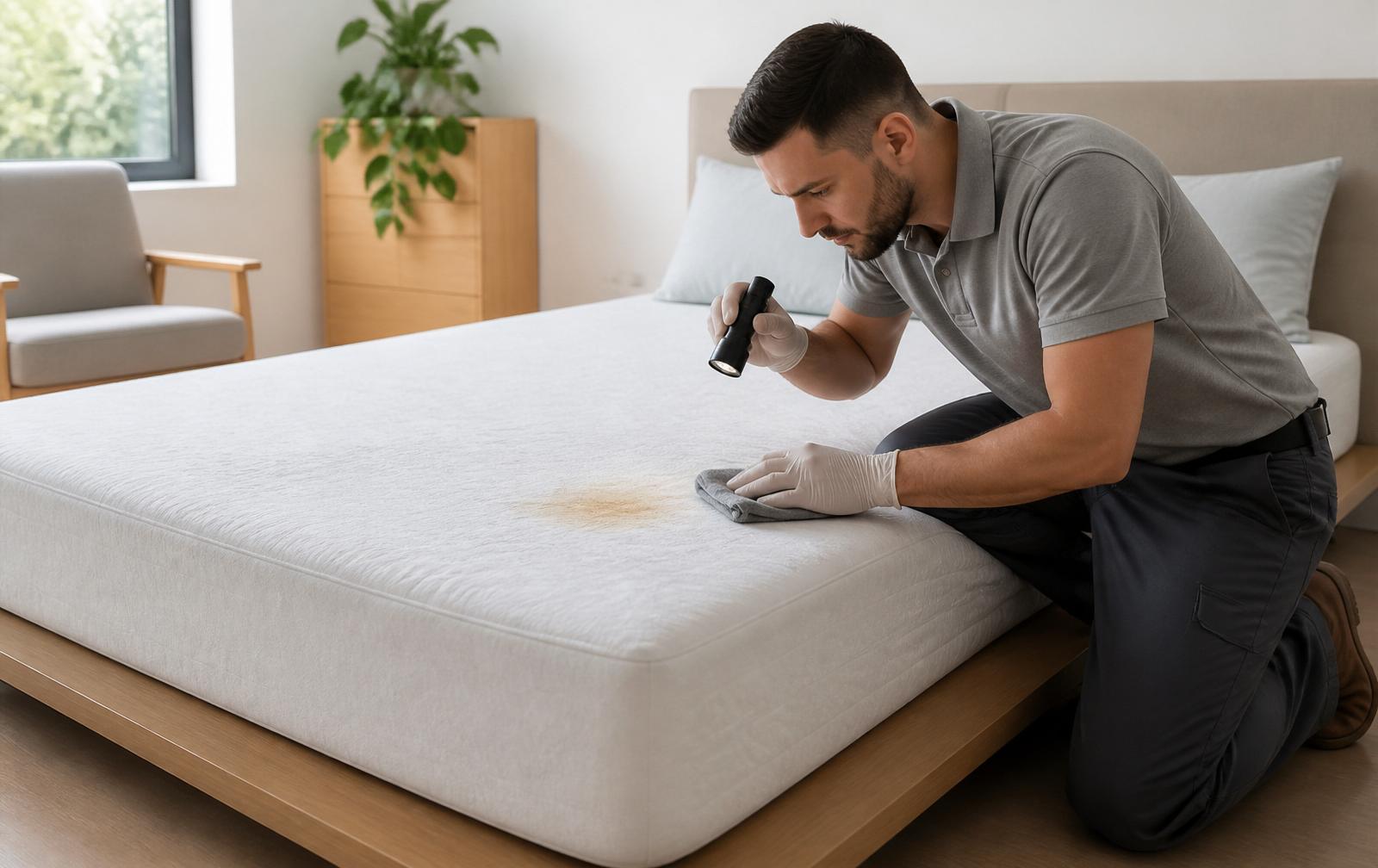
Yellow mattress stains are not always urine: most come from sweat, body oils, ambient humidity, saliva or older stains that have oxidised over time. A gentle home treatment can help on a fresh stain; an old, widespread stain or one paired with lingering odour needs professional cleaning. No cleaning can guarantee the full disappearance of an old yellow stain.
Need professional cleaning in Strasbourg?
Send a photo of your sofa, mattress or rug for a first opinion and a clear estimate.
You pull off the sheet and there it is: a yellow stain on your mattress. This is extremely common — and rarely caused by a single thing. Contrary to what you often read online, a yellow mattress stain does not automatically mean urine. It can come from sweat, body oils, room humidity, saliva, older stains that have oxidised over time, or even leftover residues from a previous cleaning attempt. Understanding the real cause is the first step to acting sensibly.
This article explains where these stains come from, what you can reasonably clean yourself, what you must absolutely avoid and when a professional cleaning becomes useful. No miracle promises: an old yellow stain does not always fully disappear, and no honest professional can guarantee otherwise before actually seeing the mattress.
In short
Yellow mattress stains mostly come from sweat, body oils, ambient humidity, saliva or older stains that have oxidised. Not all of them are urine. A fresh stain can often be softened with a gentle home treatment; an old, widespread stain or one with lingering odour needs professional cleaning. Aggressive household products (bleach, ammonia, coloured cleaners) can make things worse — they may set the stain, discolour the fabric or damage the mattress.
Why do yellow stains appear on a mattress?
A mattress absorbs a significant share of the moisture your body releases every night. An adult loses on average between 200 and 500 ml of water per night as sweat, on top of skin oils, dead skin cells and various residues. When the mattress is poorly protected, this moisture reaches the fabric and can migrate into the top layers. Over time, these organic deposits oxidise in contact with air and light, producing a gradual yellowish colouration.
Other common causes add up: saliva during sleep, a spilled drink that was not dried properly, an incident from a child or pet, a bedroom that is too humid, or a mattress stored in a poorly ventilated area. Finally, some yellow stains are simply older untreated stains that kept evolving under the sheet and the cover.
Sweat, humidity, saliva, perspiration, old stains
Here are the main sources we most often identify during a professional mattress cleaning:
- Night sweat and perspiration, especially in the head, back and thigh areas.
- Body oils and sebum, more concentrated around the pillow and shoulders.
- Saliva, which often leaves a faintly yellow ring near the head.
- Poorly evacuated ambient humidity in under-ventilated bedrooms.
- Spilled liquids (water, tea, herbal tea, milk) that were not dried at the time.
- Old organic stains (food, blood, drinks) that have oxidised.
- Residues of household products used during a previous cleaning attempt.
In most cases, several causes stack on top of each other. A single visible stain often combines sweat, oils and an older spill — which is why one universal treatment rarely gives the exact result people hope for.
The difference between yellow stain, urine, humidity and mould
Not every yellow mark is the same. A few simple clues help to narrow down the cause:
- Sweat / body oils: diffuse stain, no sharp edges, often symmetrical and located where the body rests.
- Urine: stain with a more defined outer ring and typically an ammonia-like smell.
- Humidity / oxidation: very broad, even colouration, no sharp edges, sometimes across most of the surface.
- Mould: small black, grey or greenish spots more than yellow, with a musty smell and sometimes a light fuzz.
Can I clean a yellow stain myself?
Yes, in some cases — especially when the stain is recent, limited in size and the mattress is in good condition. The goal is not to remove it entirely but to soften it without making things worse. A cautious approach:
- Vacuum the area carefully to remove dust and debris.
- Blot (do not rub) the stain with a clean, slightly damp cloth.
- Use a gentle product: a little lukewarm water with a few drops of neutral soap is often enough.
- Do not saturate the mattress; work in small areas by blotting.
- Absorb moisture with a clean cloth and let the mattress air-dry with the window open.
- Do not put the sheets back until the mattress is fully dry.
On an old or very large stain, this kind of treatment may soften the appearance slightly, but rarely erases it. Repeating passes or reaching for stronger products usually does not improve the outcome and often damages the fabric.
What to avoid absolutely
Several very common reflexes cause more harm than good. We regularly see the consequences at our clients' homes:
- Bleach: can discolour the fabric, actually yellow certain fibres and weaken the mattress.
- Ammonia and aggressive descalers: they attack the fibre and leave hard-to-remove residues.
- Coloured products (fragranced multi-purpose cleaners, pigmented household products): they may transfer colour to the fabric.
- Energetic rubbing: it spreads the stain and damages the fabric.
- Soaking the mattress: water gets into the foam and is very hard to extract, which can create internal mould.
- Iron or hot hairdryer directly on the fabric: risk of burning the fibre or permanently setting the stain.
- Stacking several products in a row: chemical mixes can set the stain or trigger unwanted reactions.
When is a professional cleaning recommended?
Professional cleaning becomes useful — or necessary — in several situations:
- The stain is widespread, old or covers a large part of the mattress.
- It comes with a lingering smell (sweat, ammonia, mustiness).
- Several household products have already been tried without success.
- The mattress is used by a child, an allergic person or someone recovering from illness.
- The mattress has never been deep-cleaned in several years.
- You are preparing to sell the mattress or welcome a new occupant.
A professional uses powerful vacuums, upholstery-suitable products and injection-extraction machines that limit residual moisture. To see what actually happens on-site, read our article on how professional mattress cleaning works.
Can every stain fully disappear?
No — and it is important to say it clearly. A very old stain, a discolouration set into the fibre, an already weakened fabric or a mark left by a product that altered the colour cannot be fully erased. A serious cleaning often significantly softens the stain, removes a large share of organic deposits, evens out the overall colour and neutralises many odours, but it does not bring the fabric back to a brand-new state.
How to prevent yellow stains from coming back?
Prevention beats treatment. A few simple habits noticeably reduce the appearance of yellow stains:
- Use a good quality washable mattress protector and change it regularly.
- Air the bedroom every morning, even for a few minutes, to release night humidity.
- Pull off the sheets and let the mattress breathe for a few hours once a week when possible.
- Avoid eating or drinking in bed — at least not coloured, sugary drinks.
- Handle any incident (spilled glass, heavy sweat) immediately, without waiting.
- Plan a professional cleaning every 12 to 24 months depending on use.
Mattress cleaning in Strasbourg and Alsace
Pronett67 operates on-site in Strasbourg, the Eurométropole and Alsace for mattress cleaning. For a first assessment, you can send us one or several photos via WhatsApp — this is enough to steer the method and provide an indicative price range. An exact result can never be promised from a photo alone, but you get an honest opinion before we even come.
Old stain or persistent odour?
Send us a photo. We reply quickly with an honest first opinion and a clear estimate.
Conclusion
A yellow stain on a mattress is rarely dramatic and rarely caused by a single thing. The right response is to identify the likely origin, act quickly but with gentle products, avoid the classic mistakes and call a professional when the stain is old, widespread or paired with a smell. No cleaning makes a mattress brand new, but the right treatment often improves its condition and freshness noticeably.
What Pronett67 can do
Pronett67 — Strasbourg / Alsace. Mattress cleaning.
Frequently asked questions
Why do yellow stains appear on a mattress?
Are yellow stains always caused by urine?
Can old yellow stains be removed?
Can I clean yellow mattress stains myself?
What products should I avoid?
When should I call a professional?
Can yellow stains come back?
Does professional cleaning remove all stains completely?
Related services
Related articles
How does professional mattress cleaning work?
Inspection, vacuuming, pre-treatment, adapted cleaning, drying: what a professional mattress cleaner actually does, without unrealistic promises.
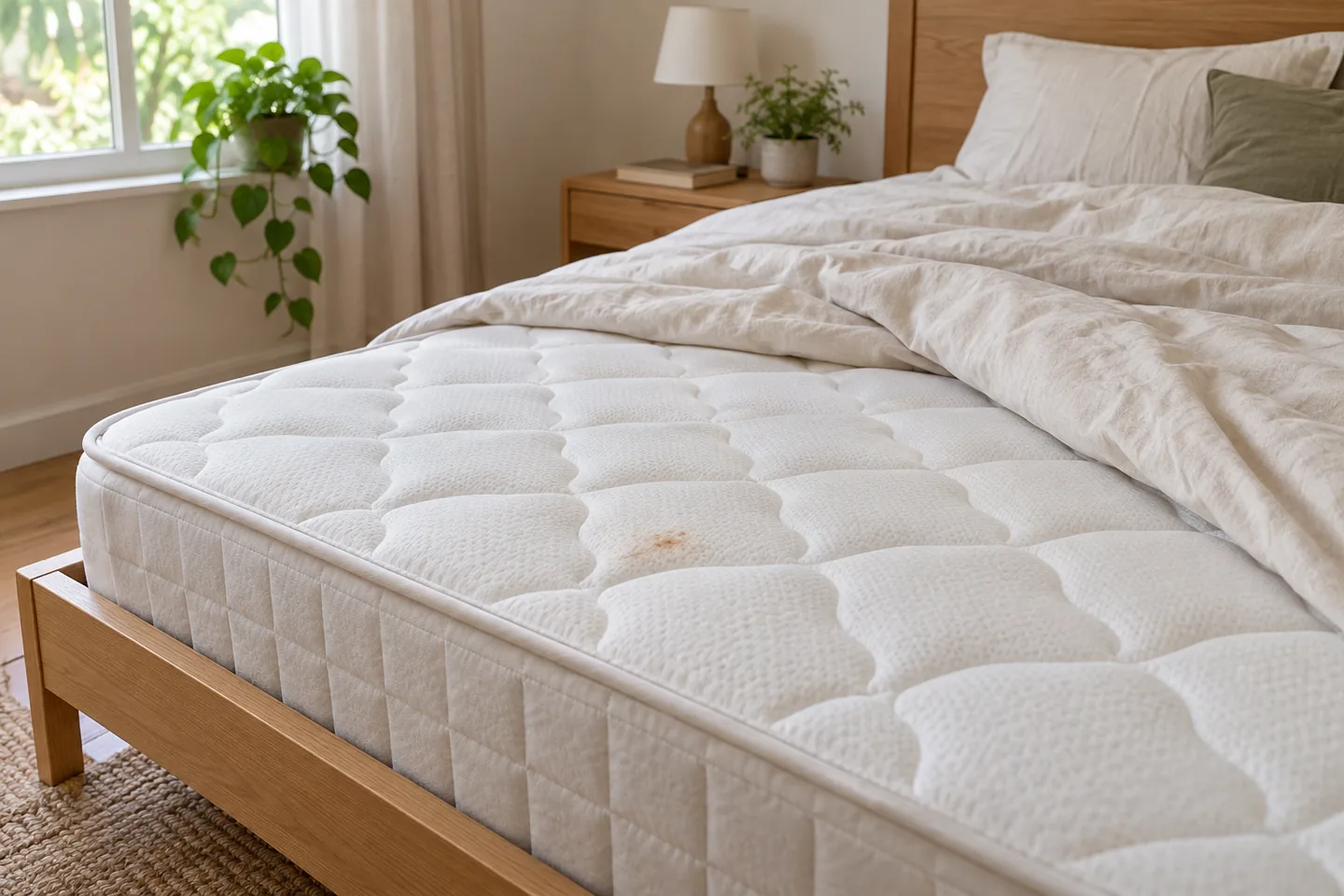
Blood stains on a mattress: what to do for fresh or dried marks
A small stain has just appeared, or an old mark will not shift: how to choose your first steps according to the fabric, the mattress instructions and any treatments already tried.

A second-hand sofa: what to check and how to clean it before use
Before collecting a second-hand sofa: what to ask the seller, which areas to inspect and which care instructions you need to plan suitable cleaning.
Need professional cleaning in Strasbourg?
Send a photo of your sofa, mattress or rug for a first opinion and a clear estimate.