
Codes W, S, WS and X: how to read a sofa care label
Codes W, S, WS and X appear on many sofa labels, but they don't replace the manufacturer's instructions or a hidden-area test. Here is how to read them safely.
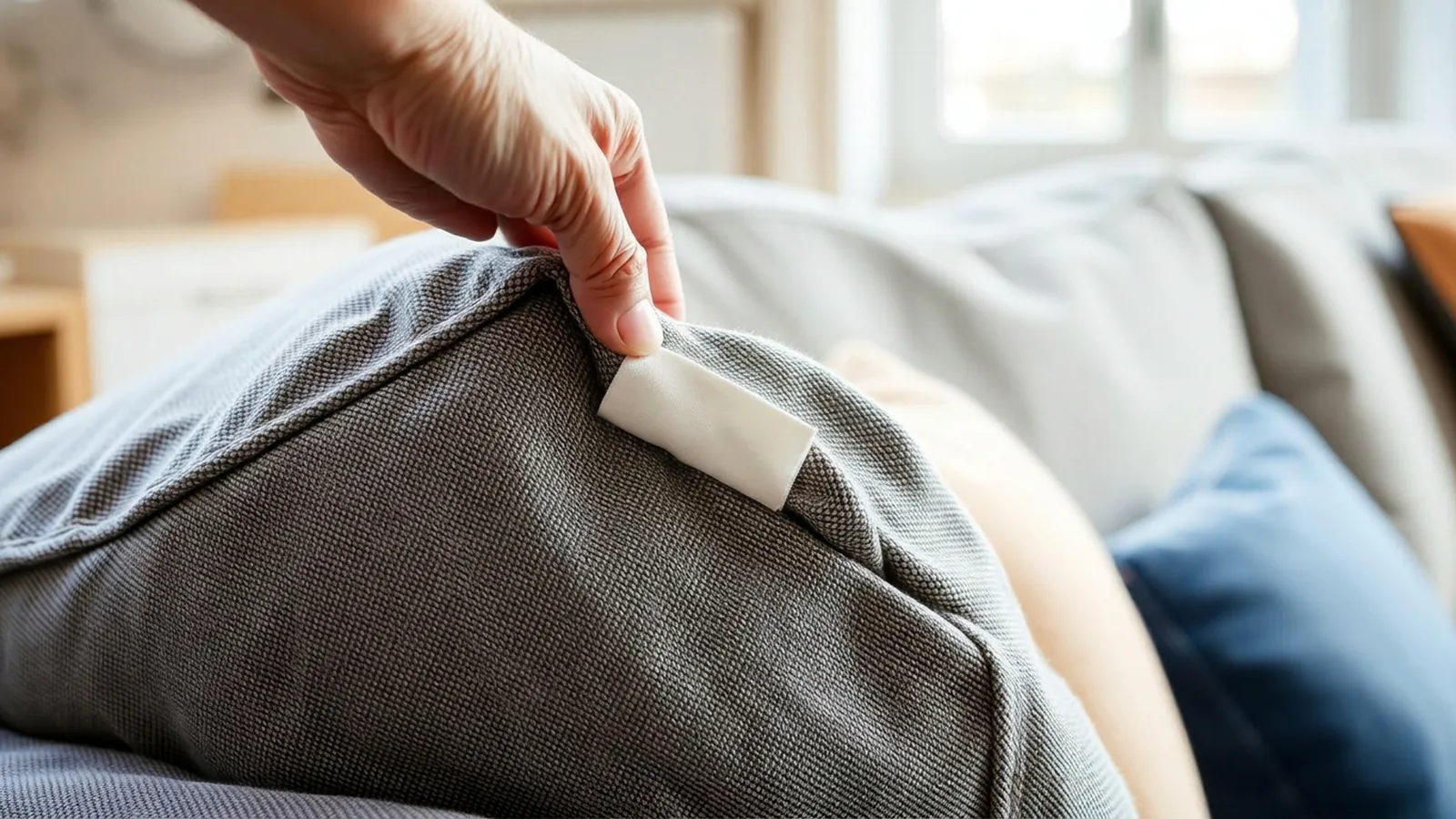
W usually indicates a water-based cleaner may be considered, S a solvent-based one, WS or W-S both, and X a fabric to be vacuumed only, without moisture. These codes are common but are not a mandatory European standard: the manufacturer's label, fibre composition and a hidden-area test always take priority. When in doubt, don't use household solvents — call a professional.
Need professional cleaning in Strasbourg?
Send a photo of your sofa, mattress or rug for a first opinion and a clear estimate.
Many sofas carry a small label with a single letter: W, S, WS or X. This Anglo-Saxon marking has spread to manufacturer labels distributed in Europe, France included. It provides a quick hint about what type of cleaning may be considered — but it is neither universal, nor mandatory, nor sufficient. This article explains what these codes mean, what they don't guarantee, and how to avoid mistakes that damage a sofa.
Where to find the care label
The label can sit under a removable cushion, at the back of a backrest, inside a zipped cover, sewn to the lower band, or sometimes inside a sofa-bed's storage box. On a fixed non-removable sofa it is more discreet. Take the time to find it before any treatment: it changes the whole cleaning plan.
General meaning of the codes
| Code | Common interpretation |
|---|---|
| W | A water-based cleaner may be considered. |
| S | A solvent-based cleaner (dry-clean product) may be considered. |
| WS / W-S | Both approaches may be considered. |
| X | Vacuum and gentle brushing only, no moisture, no solvent. |
What each code allows — and doesn't
Code W
It indicates that a water-based treatment may be considered. It does not mean any liquid household cleaner will do: too alkaline, too concentrated or poorly rinsed can halo, discolour or stain. W does not guarantee that water won't migrate dyes or lift a pre-existing halo.
Code S
It suggests a solvent-based product (professional dry cleaner) may be considered. It absolutely does not mean the user should experiment with acetone, white spirit, petrol, nail polish remover or any household solvent: those are dangerous, flammable, and can destroy synthetic fibres. Read S as 'prefer professional dry cleaning'.
Code WS / W-S
It signals that the fabric in principle accepts both approaches. It does not allow mixing water and solvent, or stacking attempts: each method still requires a hidden-area test.
Code X
It signals that wet cleaning is not recommended. Vacuum, brush gently, protect. Stains on an X fabric are particularly delicate and usually require a professional with very low-moisture or dry-cleaning methods.
Why fibre composition always takes priority
A label code does not cancel the nature of the fabric. Synthetic microfibre tolerates water; viscose velvet doesn't. Mixed wool can felt with hot water or wrong pH. Untreated silk or linen migrate easily. The manufacturer's label usually shows the composition ('100% polyester', '55% viscose 45% cotton'…): it matters more than a letter.
Missing or unreadable label: what to do
- Don't guess with a strong product.
- Vacuum carefully to remove dry particles.
- If you must act, test a very mild solution (warm water, neutral soap, very low concentration) on a hidden area.
- Wait for full drying, then check colour and absence of halo.
- When in doubt, contact a professional before any stronger treatment.
Common mistakes from too-literal reading
- Reading W as 'I can wet as much as I want' — over-wetting stays risky.
- Reading S as 'any solvent from the cupboard is fine'.
- Reading X as 'nothing can be done' — pros have low-moisture methods.
- Believing WS allows mixing two products at once.
- Trusting the code without checking composition or testing a hidden area.
When to contact a professional
- X label, or missing label on a valuable sofa.
- Set-in stains, urine, blood, coffee, wine, oil.
- Persistent odour despite airing.
- Delicate fabric or dye-sensitive patterns.
- Aftermath of a water leak or a failed prior cleaning.
- Doubt on composition or dye fastness.
We do not use acetone, white spirit, petrol, nail polish remover or bleach on upholstery. Professional cleaning uses fibre-appropriate products and a controlled method.
Old stain or persistent odour?
Send us a photo. We reply quickly with an honest first opinion and a clear estimate.
Summary
W, S, WS and X are useful first hints, but they don't replace attention or experience. Fibre composition, dye fastness, stain age and sofa construction weigh at least as much as the letter on the label. When in doubt — no label, delicate sofa, set-in stain — a professional avoids many bad surprises.
What Pronett67 can do
Pronett67 — Strasbourg / Alsace. Sofa cleaning.
Frequently asked questions
Does code W allow full water washing?
Can I use acetone or white spirit on an S-coded sofa?
What if my sofa is labelled X?
Are these codes mandatory in Europe?
What if the label is missing?
Can I clean a WS sofa with hot water and lots of soap?
Is the label enough to pick the right method?
Do I need to test on a hidden area before cleaning?
Related services
Related articles

How does professional sofa cleaning work?
Inspection, vacuuming, pre-treatment, injection-extraction, drying: what a professional sofa cleaner actually does, without unrealistic promises.
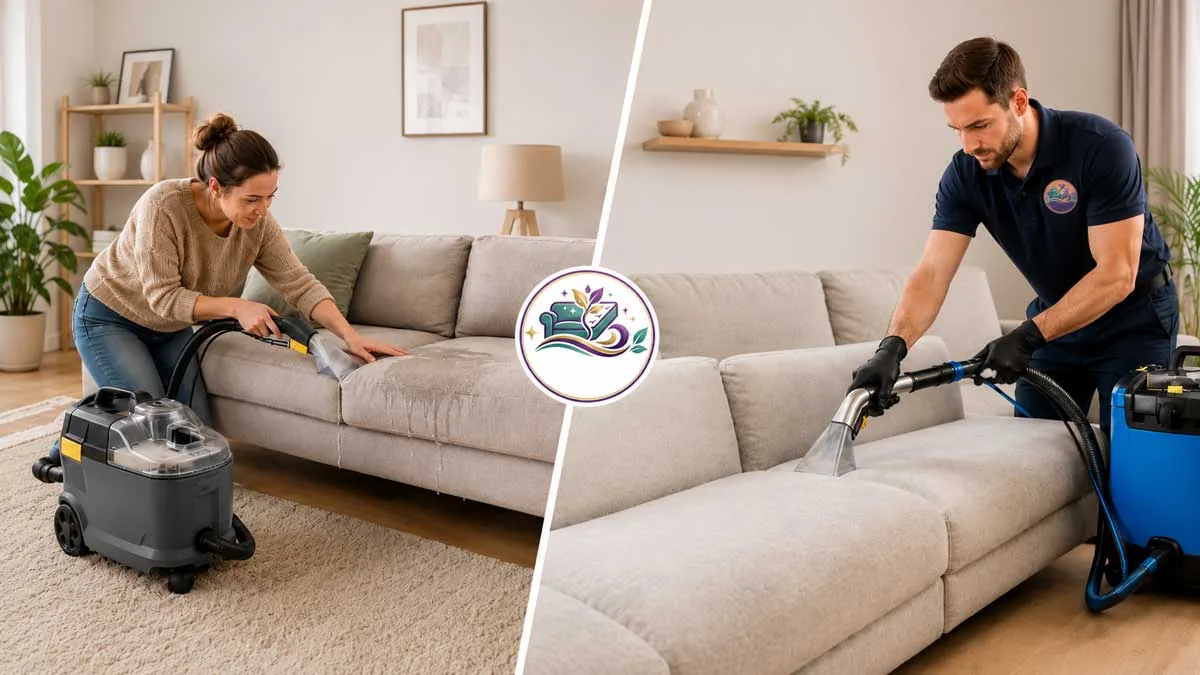
Renting a carpet cleaner in Strasbourg or professional cleaning: which to choose?
Renting a carpet cleaner looks cheaper at first sight, but results, time spent and risks differ. Here is an honest comparison to help you choose.
How to remove a persistent smell from a sofa
A persistent smell in a sofa is not fixed with a fragrance. Identify the source, air the room, remove debris, avoid risky mixtures — and treat the cause, not just the symptom.
Need professional cleaning in Strasbourg?
Send a photo of your sofa, mattress or rug for a first opinion and a clear estimate.