
Coffee stains on a rug: what to do for each material
Spilt coffee, a dried stain or previous cleaning attempts: the first steps and material checks to make before treating a mark on a rug.
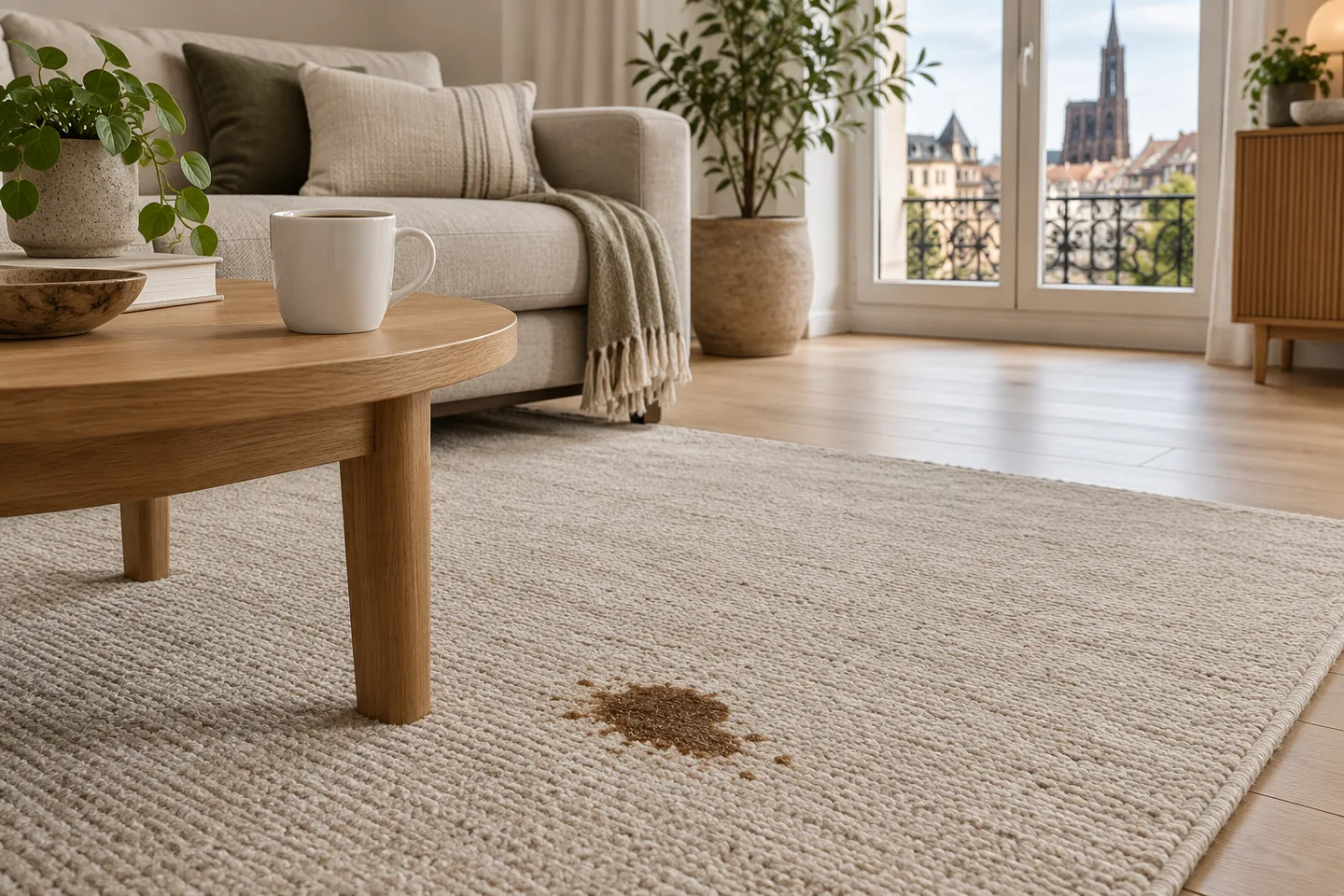
For a fresh coffee stain, absorb the liquid with a clean, dry white cloth, working from the edge towards the centre without rubbing. Then check the instructions for your exact rug before adding water or a cleaning product: wool, viscose, silk, jute and different backings do not all tolerate the same treatment. Do not automatically re-wet a dried stain, and record any treatments already attempted. If the material or care instructions are unknown, ask for advice before trying a damp treatment. An old mark cannot be guaranteed to disappear.
Need professional cleaning in Strasbourg?
Send a photo of your sofa, mattress or rug for a first opinion and a clear estimate.
The cup has tipped over and coffee is spreading into the rug. The useful first step is to lift the liquid that has not yet soaked in with a white absorbent cloth, without rubbing. Choosing a stain remover comes later: a method suitable for one synthetic rug may leave a mark on another rug, even if they look alike.
1. Spilt coffee: absorb it before treating the stain
- Move the cup away and keep people off the area. Do not cover it with an object to hide the problem.
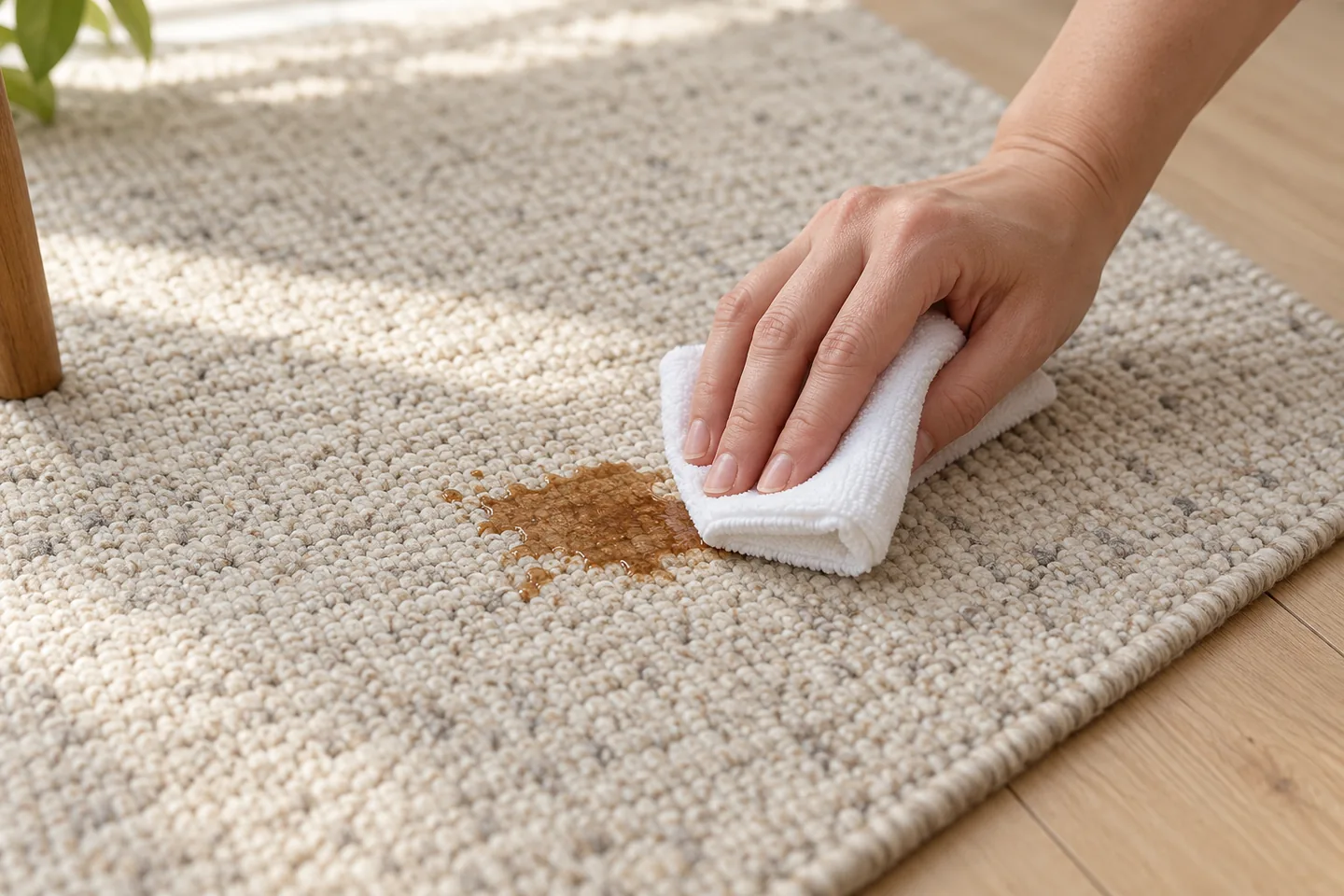
- Place a clean, dry white absorbent cloth on the liquid and press gently. Work from the edge of the stain towards the centre, without rubbing back and forth.
- Fold or replace the cloth as it takes up coffee. Continue while it still absorbs liquid, without brushing or working the pile.
- Photograph the mark, note when the spill happened and find the rug’s care instructions before adding water or a product.
A white cloth lets you see what it picks up without introducing dye from a coloured towel. WoolSafe also advises against rubbing when caring for wool rugs: friction can spread the soil and damage the surface. This first dry blotting step does not establish that the rug can be washed.
2. Check the rug before adding water
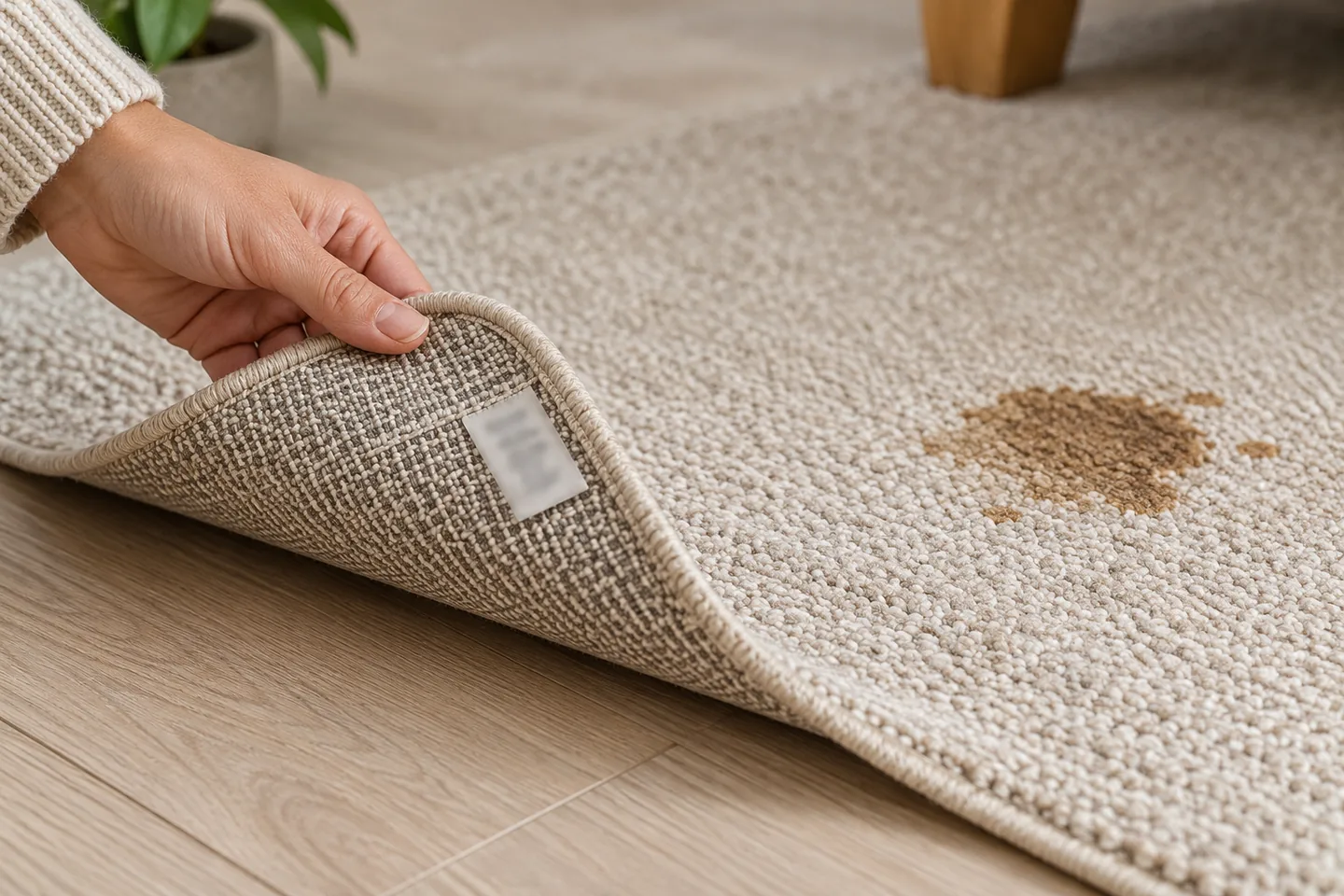
Look for the label, model reference and instructions for that exact rug. The pile composition does not necessarily tell you about the backing, adhesives or dyes. “Do not wash” is not implicit permission to treat a spot with any liquid: check the spot-cleaning instructions separately. The W, S, WS or X codes found on some upholstery are not a universal system for rugs.
| Rug type or information available | Why it matters | Decision before a damp treatment |
|---|---|---|
| Identified synthetic, cotton or mixed-fibre rug | The fibre alone does not establish how the colours and backing will respond. | Find explicit spot-cleaning instructions for that model. |
| Wool | WoolSafe provides guidance on caring for wool fibres and choosing compatible products. | Check both the rug and product instructions; do not substitute a household cleaner for a stain remover intended for wool. |
| Viscose or silk | These materials need particular care; the instructions may rule out a damp treatment at home. | Do not improvise a water test. Have the method confirmed for the exact rug. |
| Jute, sisal or moisture-sensitive backing | The construction and manufacturer’s instructions matter as much as the fibre name. | Do not apply a method found for a different jute rug or weave. |
| Unlabelled, old, handmade or uncertain composition | A photograph or feel alone cannot establish the material and colour stability. | Limit the first response to dry blotting of free liquid and ask for advice before adding moisture. |
Manufacturers do not all give the same instructions. La Redoute’s guide rules out water and cleaning products for the viscose rugs it describes. By contrast, the IKEA STRÖG page allows spot treatment with a damp cloth and mild detergent for that particular jute model. These examples show why the exact instructions take priority; neither method can be extended to every rug made from the same material.
3. If the care instructions allow spot cleaning
Once the free liquid has been absorbed, follow only a procedure compatible with both the rug and the chosen product: dilution, application method, contact time, removal and any rinsing required. An instruction to use a slightly damp cloth does not mean pouring a glass of water onto the stain. If the instructions require professional treatment, stop trying home methods.
- Start with the discreet test specified in the instructions, only if that method is permitted. Check the result again after it has dried.
- Use the prescribed quantity and application method. Do not repeat the treatment over and over to compensate for little improvement.
- Remove residues as instructed; do not add a generous rinse out of habit. Avoid soaking either the pile or the backing.
- Stop if rug colour transfers to the cloth, the stain spreads, the pile changes or the backing remains wet.
The word “rug” on a spray-extraction machine’s packaging is not enough to decide whether to use it. The rug, the surface beneath it and the cleaning product must all be suitable for the method. WoolSafe lists coffee among difficult stains in its wool-care guide. A more powerful machine cannot replace identifying the textile and choosing a compatible treatment.
4. What to do with a dried or previously treated coffee stain
A dried stain has no free liquid left to blot. Do not scrub it with a stiff brush or automatically re-wet it. If dry particles sit on the surface, remove them only with a vacuum attachment and setting allowed for that rug, without repeatedly working the fibres. The remaining mark then needs the same compatibility checks as a fresh stain.
For an old coffee stain, record what has already been tried: the exact stain remover and dilution, vinegar, powder, steam, water or a hired cleaning machine. Keep a photograph of the packaging if possible. After several attempts, the visible patch may combine remaining coffee, product residue and changes to the colour or pile. A photograph helps prepare an assessment but cannot reliably distinguish these causes on its own.
5. Black coffee, milk or sugar: explain what was spilt
Say whether the spill was black coffee, a milk-based drink or coffee with sugar, along with the approximate quantity and how long ago it happened. Mention any smell or sticky feel you notice. These details help guide the assessment and treatment; they do not justify choosing an enzyme product or a homemade mixture yourself. The first step remains blotting up free liquid, then reading the care instructions.
6. Methods to avoid without the manufacturer’s approval
- Vinegar and bicarbonate of soda: do not pour them onto the stain one after another to try several remedies. Visible foam proves neither stain-removal effectiveness nor compatibility with the fibres.
- Washing-up liquid, laundry detergent, hydrogen peroxide or bleach: do not use them as universal stain removers. Their properties and removal requirements are not automatically suitable for your rug.
- Hot water, steam or a hairdryer: do not improvise a heat treatment. Temperature instructions also concern the dyes and rug construction.
- Vigorous brushing and over-wetting: do not try to save time by rubbing harder or adding more liquid.
Avoid hiding the area under a table or another rug while it dries. If a product has already been used, do not add another to neutralise it: note its name and ask how to proceed. A record of previous attempts helps prepare any later treatment better than a series of undocumented experiments.
7. Allow it to dry and assess the result when dry
After a permitted damp treatment, follow the drying conditions in the care instructions. Allow air to circulate where conditions permit, leave the area clear and keep people off it until it is fully dry. Do not direct a heat source at the pile. If the backing or floor underneath has become wet, check the situation without trying to lift a heavy rug alone, and ask for advice rather than leaving moisture trapped beneath it.
There is no drying time that applies to every rug: thickness, backing, the amount of liquid and ventilation all affect it. A surface that feels dry does not confirm that the entire construction has dried. Compare the mark once the rug is dry, in similar light; moisture or pile lying in a different direction can make an area look darker without revealing the final result.
8. When to request an assessment in Strasbourg
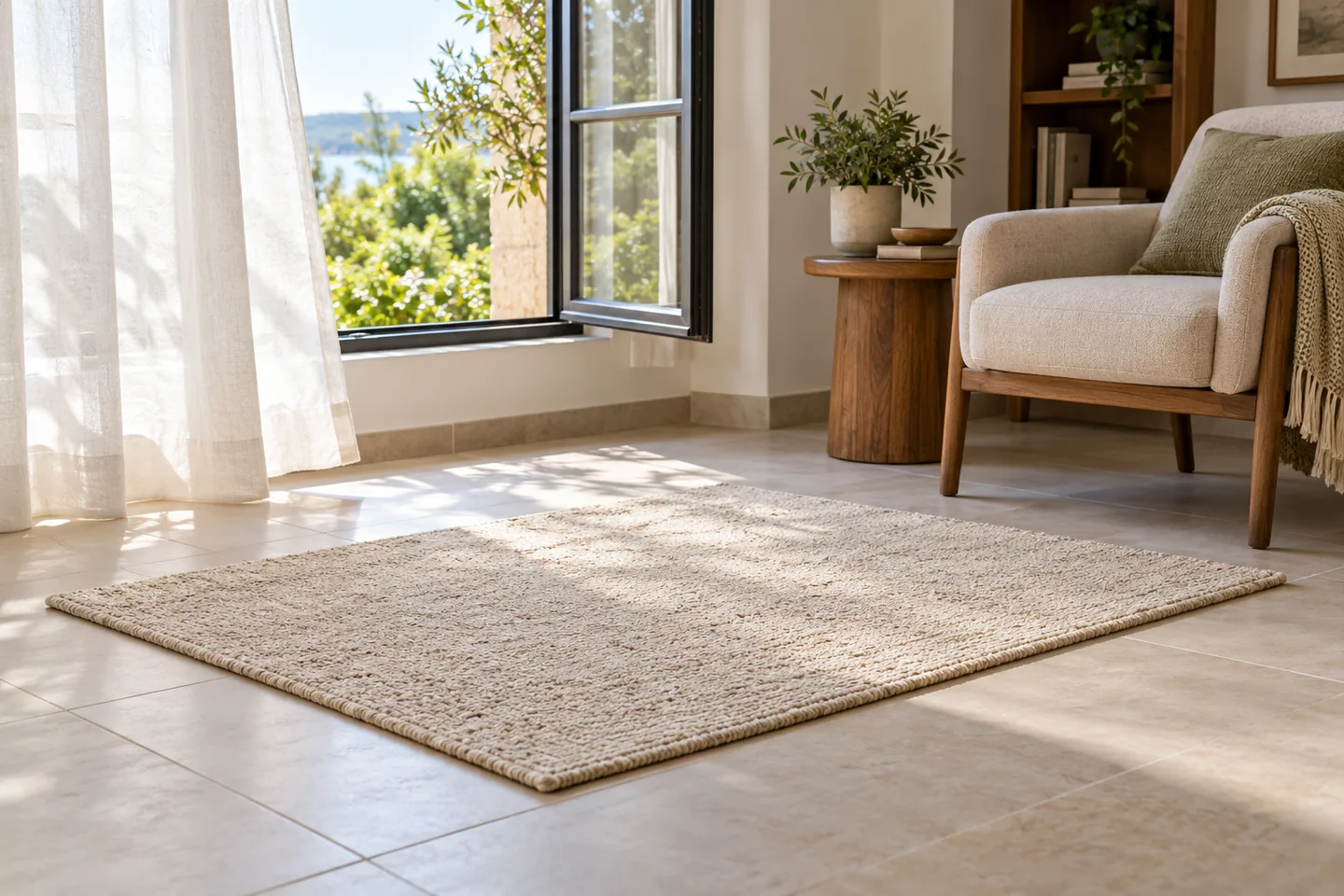
Ask for advice before wetting an unidentified, delicate, old or handmade rug. A stubborn dried stain, colour bleeding, a soaked backing or several previous treatments are also reasons to pause spot cleaning. For an enquiry to Pronett67 in Strasbourg and the Eurométropole, provide the details below. Treatment compatibility and whether work can be carried out at home must be confirmed for the rug concerned.
- A photograph of the whole rug and a close-up of the stain in natural light.
- The model reference, label, known composition and a photograph of the backing if it is easy to take.
- The length, width and your town or commune.
- When the spill happened, the type of coffee and any products or machines already used.
- Its current condition: dry or damp, any colour transfer, smell or change in texture you have noticed.
Your rug, its material and previous treatments
Have the stain assessed before trying again
Send photographs, dimensions, the label and details of treatments already attempted. Pronett67 checks the information needed for an estimate and the points to confirm on site, without promising complete stain removal.
For the stages of a service, read the guide to professional rug cleaning at home. Price calculation per square metre has its own article: mention an established stain and any rug fragility in your enquiry, rather than drawing conclusions from a standard price.
- Rug cleaning at home in Strasbourg
- What happens during professional rug cleaning?
- How is the price of rug cleaning calculated?
Sources and care instructions to check
These references support the general precautions and illustrate care instructions for particular materials or models. They do not replace your rug’s own instructions. WoolSafe’s advice concerns wool in particular; La Redoute’s and IKEA’s instructions apply to the rugs they describe. The Multi-Clean technical bulletin concerns professional treatments; its chemical methods are not home stain-removal instructions.
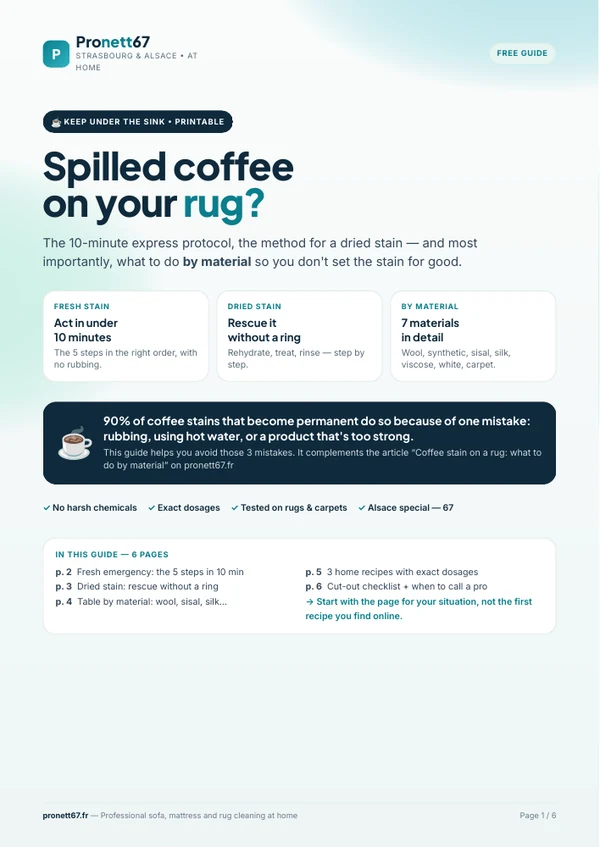
Your free guide
Coffee on your rug? Keep the SOS guide
Download the English edition to keep the steps and checklist handy, even after you close this page.
- Fresh spills and dried stains
- A table organised by rug material
- A printable checklist to keep
Direct download. No sign-up required.PDF · 6 pages · 125 KB
Frequently asked questions
What should I do immediately after spilling coffee on a rug?
How do I remove a dried coffee stain from a rug?
Can I put vinegar and bicarbonate of soda on a coffee stain?
What if the rug contains wool, viscose or jute?
Does coffee with milk or sugar need different treatment?
Can an old coffee stain disappear completely?
Related services
Related articles

How does professional rug cleaning at home work?
Inspection, fibre identification, vacuuming, pre-treatment, adapted method, controlled extraction and drying: the real stages of a professional rug cleaning at home.
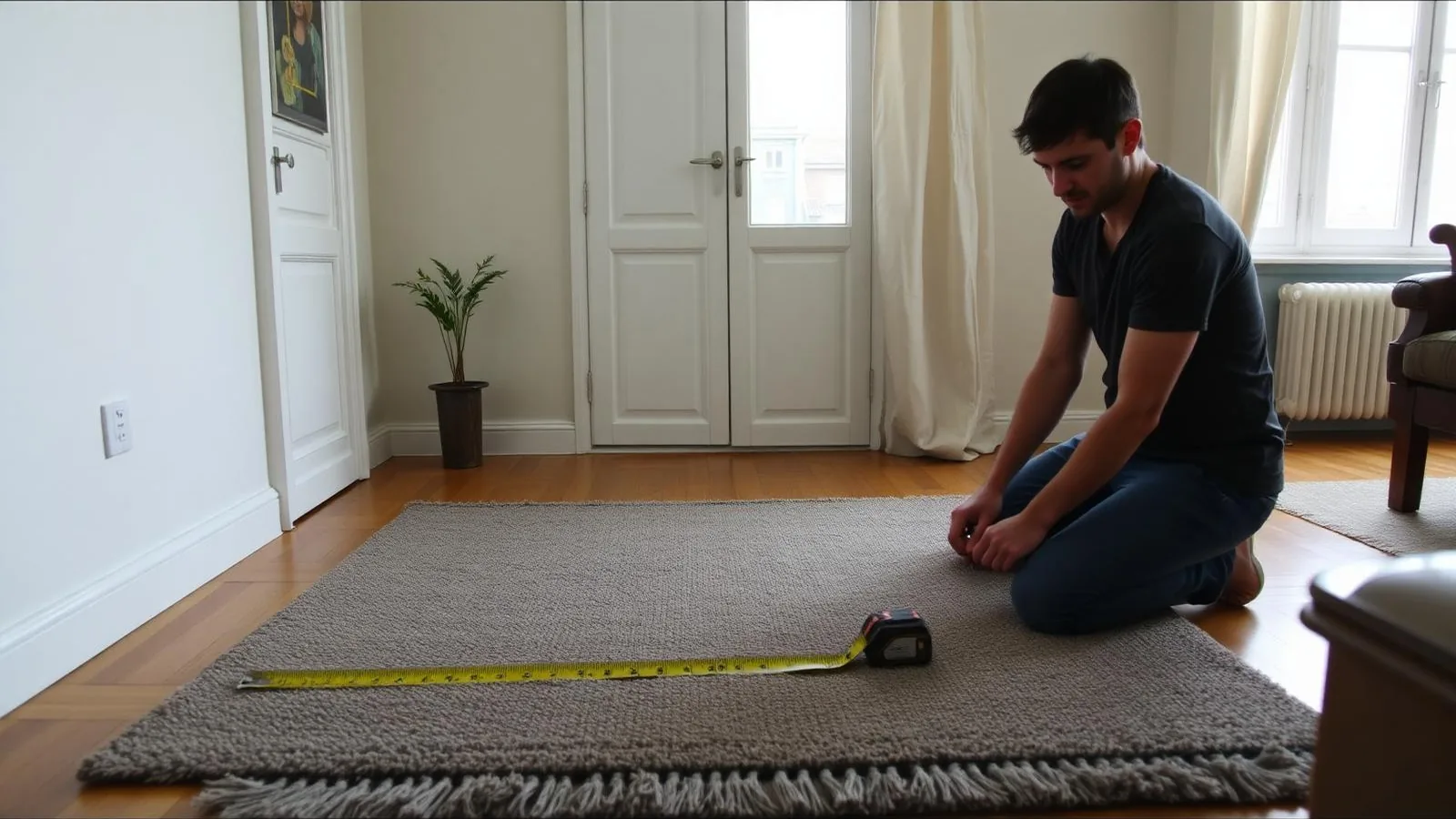
Rug cleaning price in Strasbourg: how to calculate the cost per m²
A rug is almost always priced per m². Here is how to measure, what per-m² rate Pronett67 applies in Strasbourg by material, and what can affect the final quote.

Renting a carpet cleaner in Strasbourg or professional cleaning: which to choose?
Renting a carpet cleaner looks cheaper at first sight, but results, time spent and risks differ. Here is an honest comparison to help you choose.
Need professional cleaning in Strasbourg?
Send a photo of your sofa, mattress or rug for a first opinion and a clear estimate.